2.25LCD UI Common & Product Guidelines Collaboration
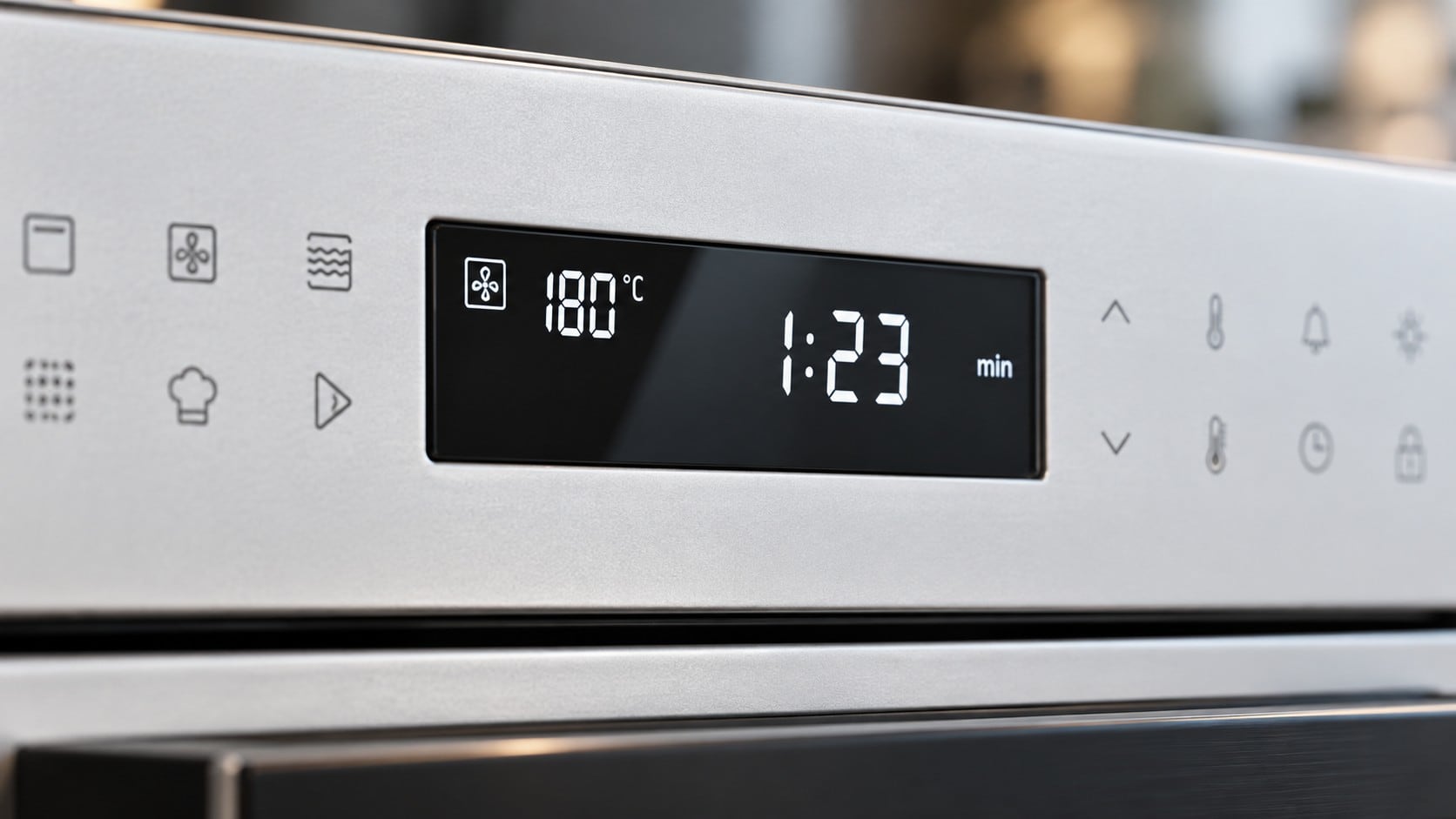
One 2.25-inch panel, many appliances. The screen is the same size everywhere and the machine behind it never is.
A guideline for a display this small is mostly a question of what it is allowed not to say. The work was drawing the line between what every product must share and what each one may keep for itself — written as a common guideline with product guidelines sitting under it.
Technology trends
Written by AEON from public sources. It describes the field, not the project above.
Walk through a large appliance showroom in 2026 and the displays sort themselves into tiers. At the top are refrigerators with door-sized touchscreens. Below them come washers and ovens with mid-sized panels. Across most of the range sit small fixed displays that show a cycle, a temperature or a countdown, and very little else. Samsung made this tiering explicit when it announced that its AI Home screen would come in 9-inch and 7-inch versions across refrigerators, laundry and wall ovens, with a 4.3-inch laundry variant in some markets whose features are not identical. For interface designers the interesting part is not the large screen but the ladder. The same service now has to be expressed at several sizes, and someone has to decide what survives each step down.
That decision is mostly about how much a person can take in. Nielsen Norman Group argued as early as 2014 that design across screen sizes is limited by the capacity of the human–device channel: smaller screens show less at once, so people hold more in working memory, and their attention is more often interrupted. An appliance makes those limits tighter still. Its display is read in a glance, often while someone is carrying a basket or minding a pan. Small displays therefore lean on a compact vocabulary of icons, numerals and short labels, and international symbol standards and long-established conventions, such as the power symbol, do much of the work of making that vocabulary readable without instruction.
The second shift is that an appliance's software no longer stays as it was on the day of purchase. LG's ThinQ UP programme, launched in Korea in January 2022 and rolled out internationally from 2023, lets owners download new appliance functions through the companion app. Samsung described a wall oven whose plain 7-inch LCD was upgraded over the network into its richer home screen. Once features can arrive after launch, a display guideline can no longer be a set of finished screens. It becomes a set of rules and reserved places that a function nobody has designed yet can fit into.
Running against the spread of touchscreens is a renewed respect for controls that can be found without looking. The clearest signal comes from cars rather than kitchens: Euro NCAP's 2026 protocols reward dedicated physical controls for indicators, hazard lights, wipers, the horn and the emergency call, treating touch-only operation of core functions as a safety cost. Appliances face a gentler version of the same question. Wet hands, a glance from across the room and a hurried morning all favour a control whose position and feedback do not depend on reading a screen.
For the people who use these machines, the trend points to a few modest virtues. A display should state the machine's condition plainly, in a form that can be taken in at a glance. Functions added by an update should turn up where people already look, rather than behind a menu they have never opened. And the most frequent actions, such as start, pause and cancel, should remain possible by feel, whatever the screen above them is able to show.