ADEX 2025 — Promotional Film
ADEX, the Seoul International Aerospace & Defense Exhibition, is South Korea's largest aerospace and defence exhibition, held every two years.
ADEX brings together Korean and international aerospace and defence companies, government delegations and military visitors for exhibitions, flight displays and business meetings. The 2025 edition was held in October at KINTEX in Goyang, Gyeonggi Province, with around 600 companies from 35 countries taking part.
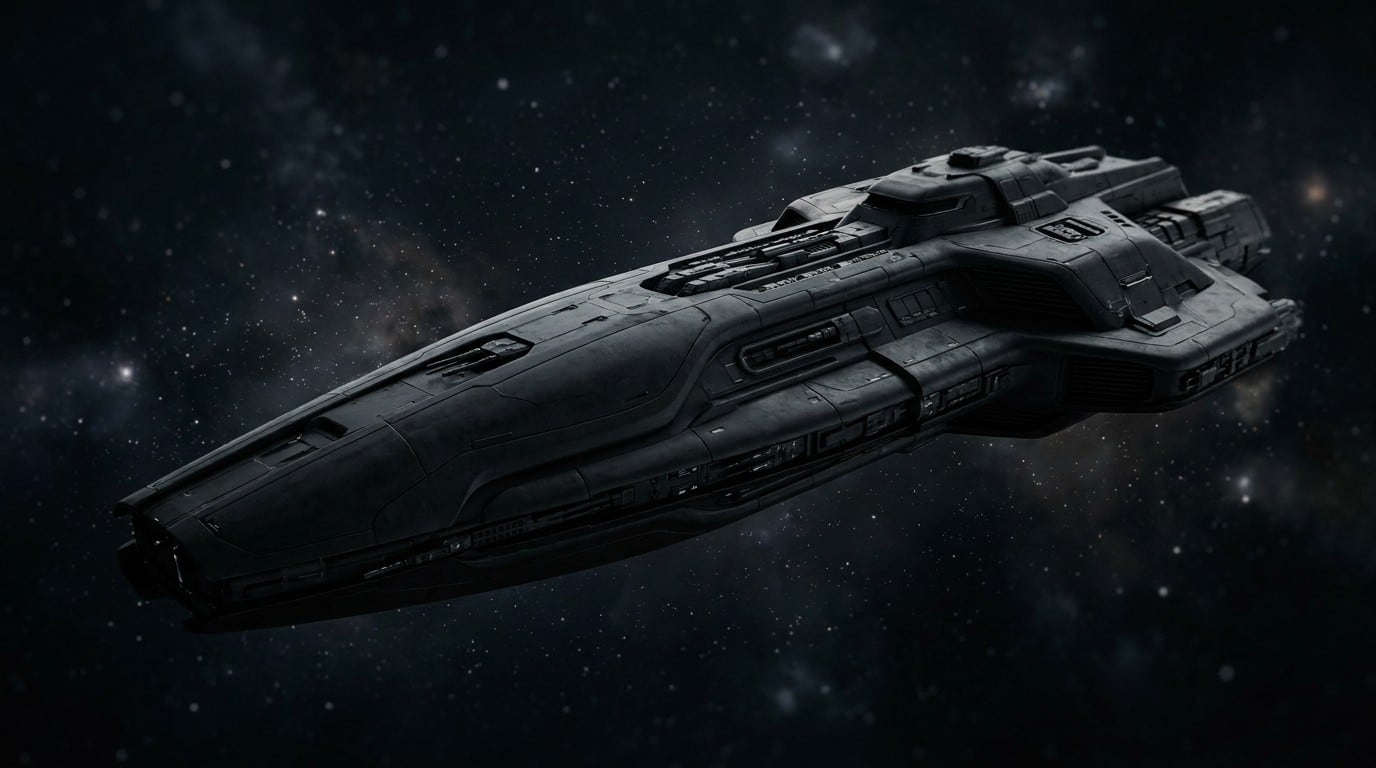
AEON produced the film shown on the main booth wall of LIG D&A (formerly LIG Nex1) at ADEX 2025, presenting the company's view of the future battlefield with imagery that was generated rather than filmed.
Technology trends
Written by AEON from public sources. It describes the field, not the project above.
Defence exhibitions have become the main stage on which companies and governments describe how future wars will be fought. ADEX 2025 at KINTEX drew around 600 firms from 35 countries, and its dominant theme was AI-enabled unmanned systems, which coverage tied to Korea's ambition to become the world's fourth-largest defence exporter.
The individual stories varied. Hanwha showed the Themis-K unmanned ground vehicle and talked of turning the K9 howitzer into a combined manned-unmanned system; KAI demonstrated a mixed-reality battle environment with an AI assistant; and exhibitors presented automated air-defence networks and manned-unmanned teaming platforms alongside very high-resolution radar satellites. Across all of them, the future battlefield was presented as a network: sensors in orbit, drones in the air, interceptors on the ground, all joined by software.
The same narrative dominated London a month earlier. At DSEI 2025, NATO's Deputy Supreme Allied Commander Europe argued that mass production and constant innovation are central lessons of the war in Ukraine, pointing to Ukraine's drone output rising into the millions per year. Exhibitors are now expected to show not only individual products but a credible picture of how those products fit into a war of attrition, pervasive electronic warfare and cheap autonomy.
That expectation is changing how exhibition content is made. Future concepts cannot, by definition, be filmed, and many current systems cannot be shown in detail for security reasons. Generative imagery has emerged as a practical way to depict systems and scenarios that do not yet exist or cannot be photographed. It brings its own discipline: defence audiences are expert, and imagery that gets equipment, uniforms or physics wrong loses credibility quickly. The craft is shifting from capturing footage to directing and checking it, with subject-matter review becoming part of the production process.
For operators, the future-battlefield narrative matters because it sets expectations. The common thread across these exhibits is a person supervising many machines through a shared picture, with AI proposing actions. Whether that vision is workable depends on questions rarely visible on a show floor: how many systems one person can realistically oversee, how trust in automation is built and calibrated, and how interfaces present uncertainty when sensors disagree. Companies that can answer those questions convincingly will have a stronger story than those that simply add more drones to the picture.