CELL(WiFi router)Web app UX Design
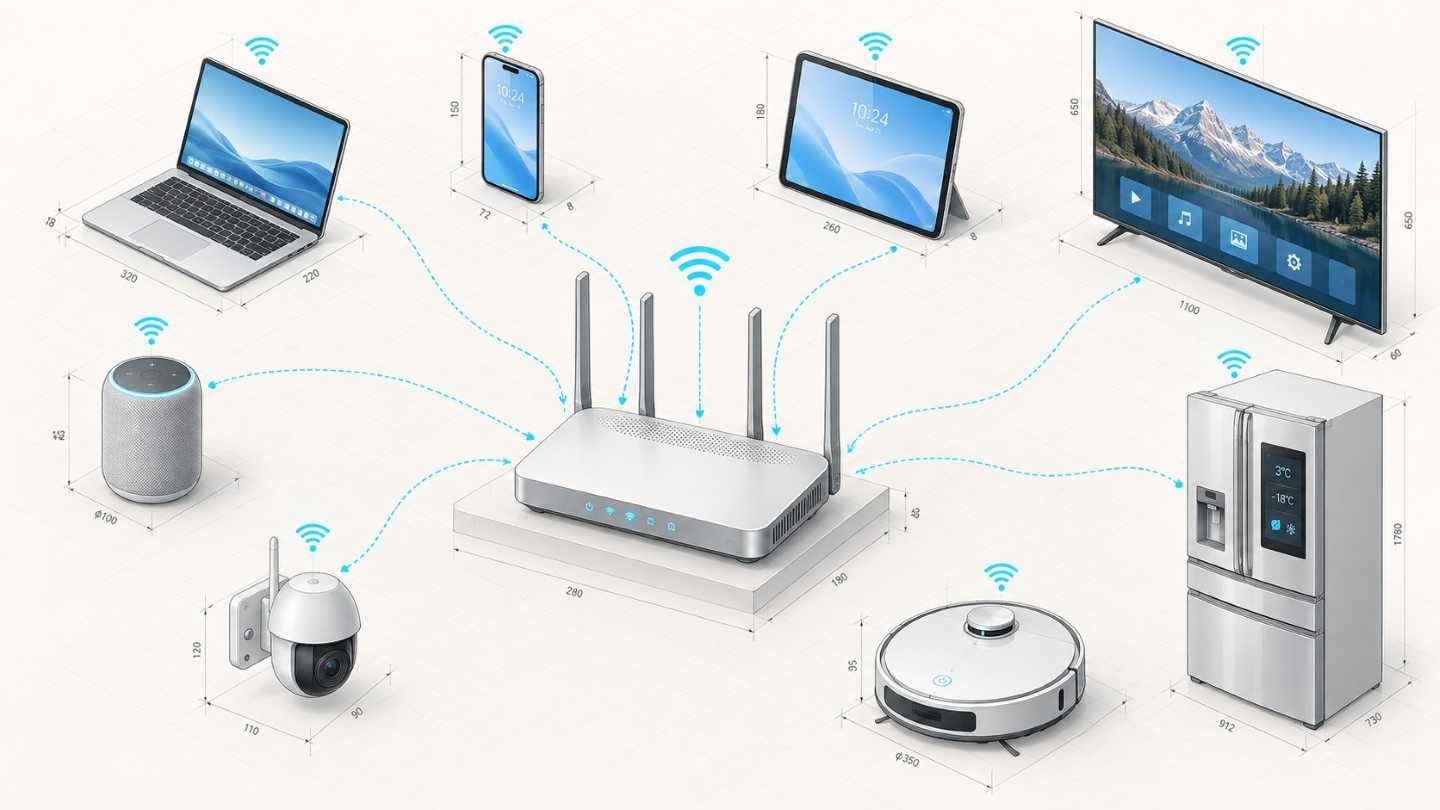
Every device in the house can be measured — its size, its weight, its model number. The one thing nobody can see is what joins them.
A router is the device everything else depends on and no one ever looks at. It sits on a shelf doing its work invisibly, and the only time a person opens its settings is when something has stopped working — which is the worst possible moment to be met by a vocabulary.
SSID, band, channel, DHCP, WPA: these are not words anyone learns, they are words people are made to accept. So the work is how many steps can be taken out, and how much of that language can be said in plain words instead.
What the person wants to know is always smaller than what the interface offers — which things in the house are connected, whether each of them is all right, and what to do about the one that is not.
UX design for the router's web app, carried through an additional phase.
Technology trends
Written by AEON from public sources. It describes the field, not the project above.
Since the late 2010s the home router has gone through a quiet change of identity. In 2017 most households still had a single box supplied by their internet provider, configured, if ever, through a web page at a local address. Today the typical arrangement is more likely to be several units forming a mesh, managed through a phone app and updated in the background without anyone noticing.
Mesh systems made that shift visible. When Samsung launched SmartThings Wifi in 2018, it paired Plume's adaptive mesh technology with a built-in smart home hub, part of a wave of products that treated coverage and connected-device management as a single problem. Choices about channels and bands that once lived on an advanced settings page increasingly moved into software that adjusts itself.
Security standards followed. The Wi-Fi Alliance introduced WPA3 in June 2018, with a handshake designed to resist password guessing even when people pick weak passwords, and announced alongside it Wi-Fi Easy Connect, which lets a phone enrol a device without a screen by scanning a QR code. Regulators have since turned good practice into obligation. The UK's connected product security rules, in force since April 2024, bar easily guessable default passwords on consumer smart devices and require manufacturers to say how long security updates will be provided.
The radio layer, meanwhile, has become more capable and more complicated. Wi-Fi CERTIFIED 7, launched in January 2024, brought 320 MHz channels in countries that have opened the 6 GHz band, along with Multi-Link Operation, which lets a device use several links at the same time. Each generation adds options that almost no householder will want to tune by hand, while the number of things on a home network, from speakers and cameras to appliances and sensors, keeps rising.
The result is a device that is simultaneously more autonomous and more consequential. A household network now carries work calls, school, security cameras and door locks, and a fault in it can stop all of them at once, yet the equipment is designed to be forgotten.
For users, the direction is less configuration and more supervision. People are rarely asked to make technical decisions about their networks now, but they remain responsible for what is connected and whether it is safe. Interfaces serve them well when they make security defaults visible rather than silent, show when the system has changed something on its own, and offer a clear way back when automation gets it wrong.