CIWS(Close-In Weapons System)-II UI/UX Consulting
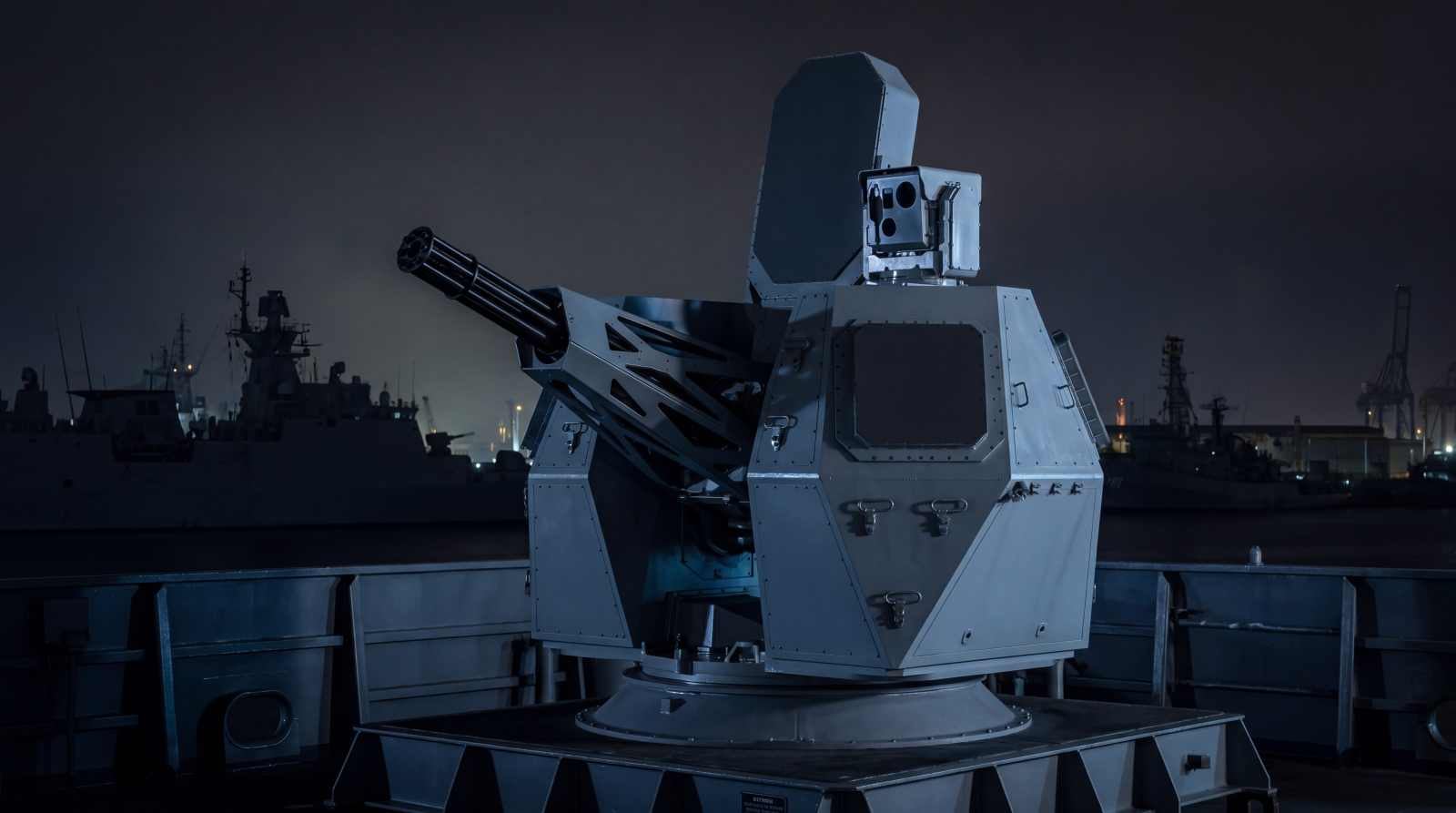
CIWS-II is a close-in weapon system under domestic development in South Korea for Republic of Korea Navy ships.
A close-in weapon system is the innermost layer of a warship's air defence, intended to destroy anti-ship missiles and other threats that get past longer-range defences. CIWS-II is being developed in Korea as the successor to the imported close-in weapon systems in Republic of Korea Navy service, combining a 30 mm Gatling gun with an active electronically scanned array radar, and is planned for future frigates and destroyers.
AEON provided UI/UX consulting for the CIWS-II system.
Technology trends
Written by AEON from public sources. It describes the field, not the project above.
The close-in weapon system has always been the last layer of a warship's air defence, and recent combat has shown why it still matters. In January 2024 the US destroyer USS Gravely used its Phalanx to destroy a Houthi anti-ship cruise missile that had closed to roughly a mile, the moment in the Red Sea campaign when a US warship had to fall back on its gun. Most intercepts there happened far further out with missiles, but the episode was a reminder that outer layers can be penetrated and that the inner layer must be ready at all times.
The gun-based CIWS is itself changing. Phalanx and Thales' Goalkeeper, both Cold War designs built around radar-directed Gatling guns, are being replaced or supplemented. South Korea's CIWS-II pairs a 30 mm Gatling gun with an AESA radar drawing on KF-21 fighter technology and is intended as the last line of defence for the FFX Batch III frigates, KDDX destroyers and future large ships, with development scheduled at contract award to finish in 2027. The Netherlands chose a different answer for its Goalkeeper replacement, combining Rolling Airframe Missiles with guided DART rounds fired from 76 mm guns, both cued by Thales radar. Raytheon's SeaRAM, which puts RAM missiles on a Phalanx-style mount, sits between the two approaches. The gun-versus-missile debate for the inner layer has not been settled; navies increasingly carry both.
Drones have changed the arithmetic. Cheap one-way attack drones and uncrewed surface vessels, used in large numbers in the Red Sea and the Black Sea, make it unattractive to spend scarce interceptor missiles on every target. That has revived interest in guns with programmable ammunition and, above all, in directed energy. The UK has contracted MBDA to fit the DragonFire laser to a Type 45 destroyer by 2027, after trials in which it destroyed drones flying at up to 650 km/h, and the US Navy's HELIOS laser aboard USS Preble shot down a target drone in a test disclosed by the Pentagon's test and evaluation office. Lasers offer deep magazines at low cost per shot, but are limited by weather, power and dwell time.
The trend, then, is towards an inner layer built from several effectors, such as guns, short-range missiles, lasers and electronic attack, managed as one defensive system rather than as separate mounts. Sensors are moving to AESA radars and electro-optical trackers able to classify small, slow targets as well as sea-skimming missiles, and counter-drone duty is turning the CIWS from a weapon fired rarely in extremis into one that may engage repeatedly against swarms, including targets on the surface.
For operators, engagement timelines at this range are measured in seconds, so crews mostly supervise automatic modes rather than aim. As effectors multiply, the human task shifts towards choosing which weapon answers which target, keeping track of remaining missiles and laser availability, and holding the authority to permit or withhold fire. That only works if the system's classification is trustworthy and its intentions are visible at a glance, which makes the interface part of the weapon's effectiveness.