Digital Legacy
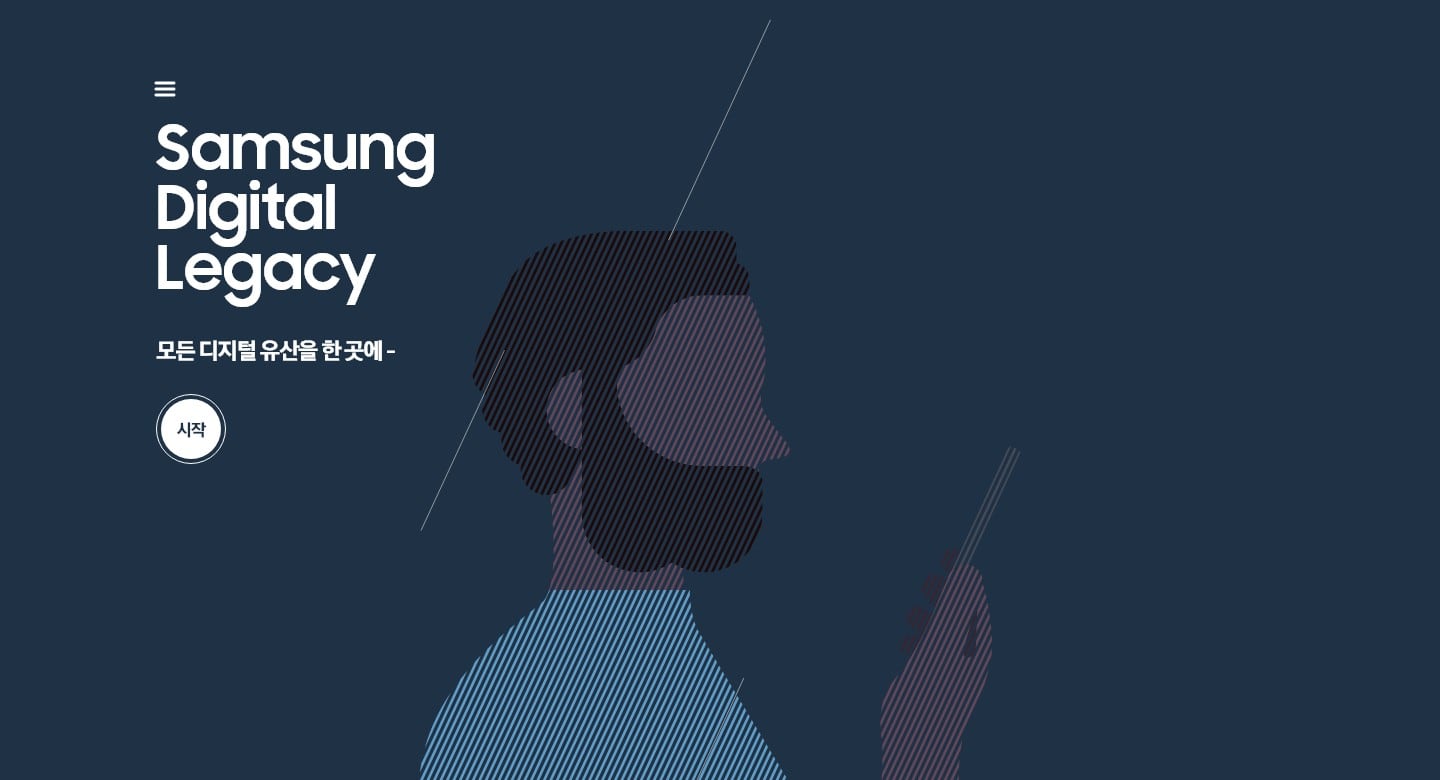
The person who set this up is gone. The people using it are grieving, and some of them are old.
Digital Legacy hands a person's data to their family after they die. That sentence is the whole design problem: the user is not the customer, and they arrive at the worst moment of their year.
A death has to be evidenced, a temporary account issued to the family, and the data made available to download. Each of those is a form somebody is filling in while grieving. Behind it sits a console showing the applications as they arrive, where each has got to, and the documents attached.
How few steps can a transfer of this kind survive? Security wants proof, and proof means forms; grief has no patience for them. Every screen sits somewhere on that line, and the position has to be chosen rather than defaulted into.
The path runs long before it runs fast — finding the feature, naming an heir, changing your mind, and only then the part that happens afterwards. We began with desk research and a content guide, since here the words come before the layout, and carried it through interface, graphics, a responsive HTML guide and a working prototype. Cloud and account behaviour, and the handover between phone and web, had to hold across all of it.
2 separate engagements on this line in 2024.
Technology trends
Written by AEON from public sources. It describes the field, not the project above.
What happens to a person's accounts after they die used to be settled, if at all, through a support ticket and a scanned letter. Over the past decade it has become a product area in its own right, shaped by platform policy, inheritance law and the plain arithmetic of an ageing online population.
The arithmetic is striking. Researchers at the Oxford Internet Institute projected in 2019 that deceased users could outnumber living ones on Facebook within roughly half a century, even under a scenario in which the network gained no new members. Whatever the exact date turns out to be, every large service already holds accounts whose owners have died, and relatives meet those accounts through shared photos, message histories and reminders that keep arriving.
Platforms have converged on advance nomination. Meta lets people choose a memorialised account manager who can look after a profile without being able to log into it, or ask for the account to be deleted instead. Apple's Legacy Contact, introduced with iOS 15.2, gives a nominated person access to photos, messages, notes, files and backups once they present an access key and a death certificate, while passwords, payment details and purchased media stay out of reach. Google's Inactive Account Manager works on a timer, passing chosen data to trusted contacts after a period of silence.
These tools now sit alongside stricter housekeeping. In 2023 Google announced that personal accounts left unused for two years may be deleted, citing the security risk of dormant accounts, with removals starting from December that year. Policies of this kind make planning less optional: an account nobody prepared for may simply disappear. Legislation varies widely between countries, and in many places the terms of service remain the working rulebook.
An unusual property of these features is their timescale. They are set up in a few taps and then left untouched for years, which raises questions that ordinary products rarely face: whether a nomination is still current, whether the nominee even knows about it, and whether an access key survives a lost or replaced phone. Prompting people to review such settings, without turning mortality into a nag, is becoming part of the job.
For the people involved, the interaction is less about speed than about clarity and dignity. Interfaces in this area work best when they state plainly what a nominee will and will not be able to see, use language that assumes no technical confidence, and give everyone a predictable picture of what happens next. Few products are used so rarely and matter so much when they are.