Education Sharing Platform Web Site Build
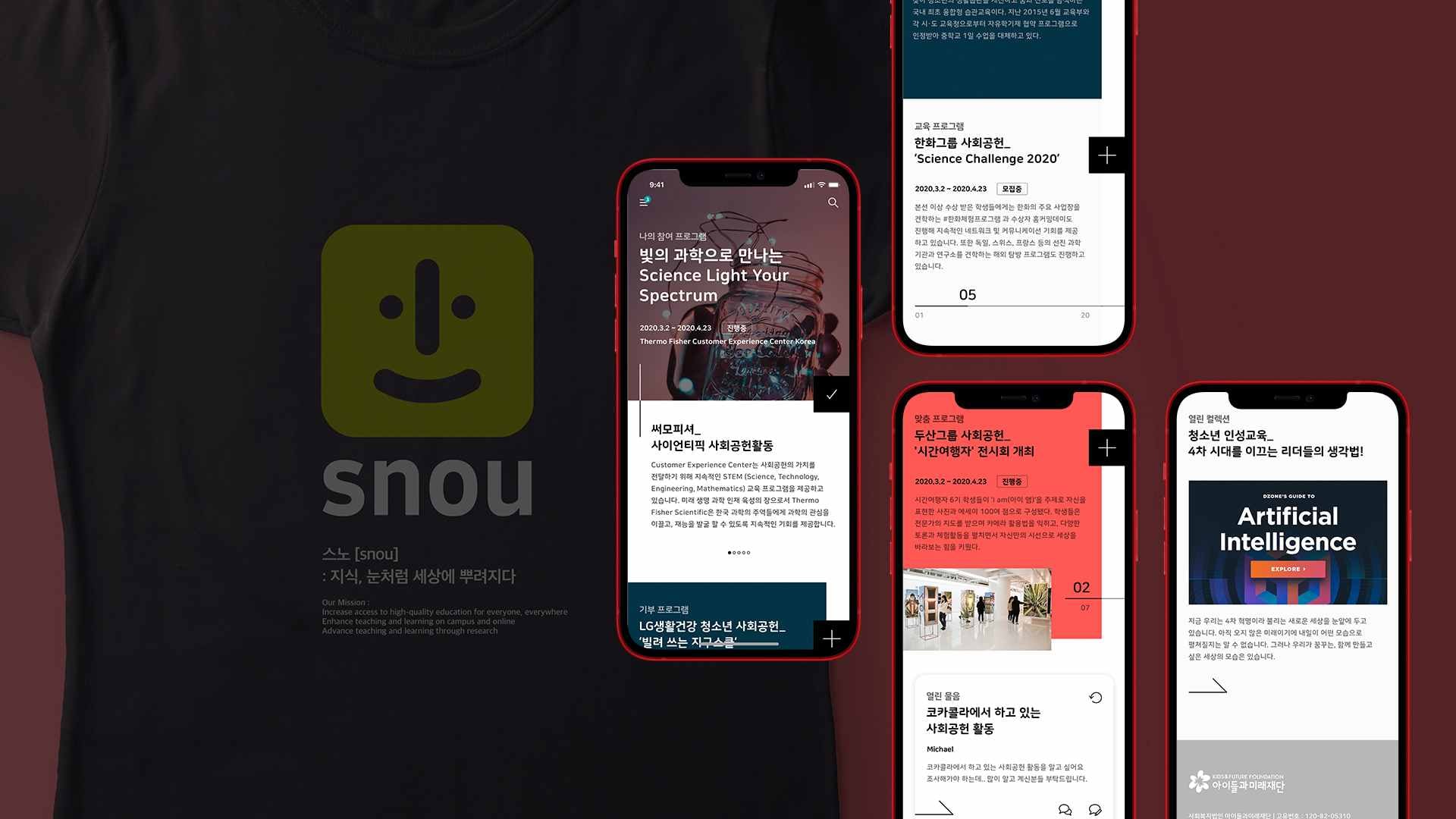
Companies with something to teach, students with time to give, and young people who need both — on one platform.
NGOs and businesses offering education, university volunteers, and the schools and teenagers on the receiving end. Each arrives expecting something different.
The structure has to connect roles that do not want the same thing from it. Put the participants and the teaching material on the two axes and the rest follows from where they meet.
We designed a service for each role around those axes and built the site.
Technology trends
Written by AEON from public sources. It describes the field, not the project above.
Since the late 2010s, platforms that connect schools with outside educators, including companies, non-profit organisations, university volunteers and working professionals, have become a recognised part of education systems rather than a goodwill extra. Korea built one of the most structured versions. Once the free semester became a standard part of middle school in 2016, schools needed a steady supply of career-experience activities. The government-backed Ggumgil career-experience network lets teachers search for programmes by map or by filters, lets providers manage school applications, and runs a certification scheme for organisations that offer career experience as an education donation.
Elsewhere the same idea has taken other forms. In the UK, the charity Education and Employers runs Inspiring the Future, which connects schools directly with volunteers from the world of work, from primary age upwards. Its research supplies much of the case for doing so. The Drawing the Future survey, published in 2018, asked children aged 7 to 11 to draw the job they wanted. More than a third based their ambitions on people they knew, gender stereotyping in job choices appeared early, and fewer than one per cent had learned about a job from someone who visited their school.
Volunteering infrastructure has matured in parallel. Korea's national 1365 volunteering portal lists opportunities and issues certificates of volunteer activity, which matter to students for whom documented service carries weight. Matching services of this kind tend to find that listing opportunities is the easy part. Keeping supply and demand aligned is harder, since provision is often uneven between cities and smaller towns, and online sessions, which became normal during the pandemic, now serve as a partial answer to distance.
Public platforms also carry obligations that commercial ones can sometimes postpone. Accessibility is the clearest. The W3C's WCAG 2.2 is the current reference for accessible web content, adding success criteria on keyboard focus, target size, alternatives to dragging, redundant entry and accessible authentication, and Korea's national web accessibility standard follows the same principles. For a service used by teenagers, teachers and volunteers alike, those requirements shape sign-up flows, forms and scheduling as much as visual design.
For the people using such platforms, whether a teacher trying to fill a timetable, a volunteer with a free afternoon or a student choosing between unfamiliar options, the experience depends on trust and clarity more than on features. Each needs to see quickly what is on offer, from whom, and what is expected of them, and to feel that arrangements are safe, especially where adults from outside a school work with young people. Platforms that make expectations and safeguarding explicit, and that take the administrative effort out of arranging a session, are the ones that keep participants coming back.