Frigate, OPV Combat System UX Consulting (Peru)
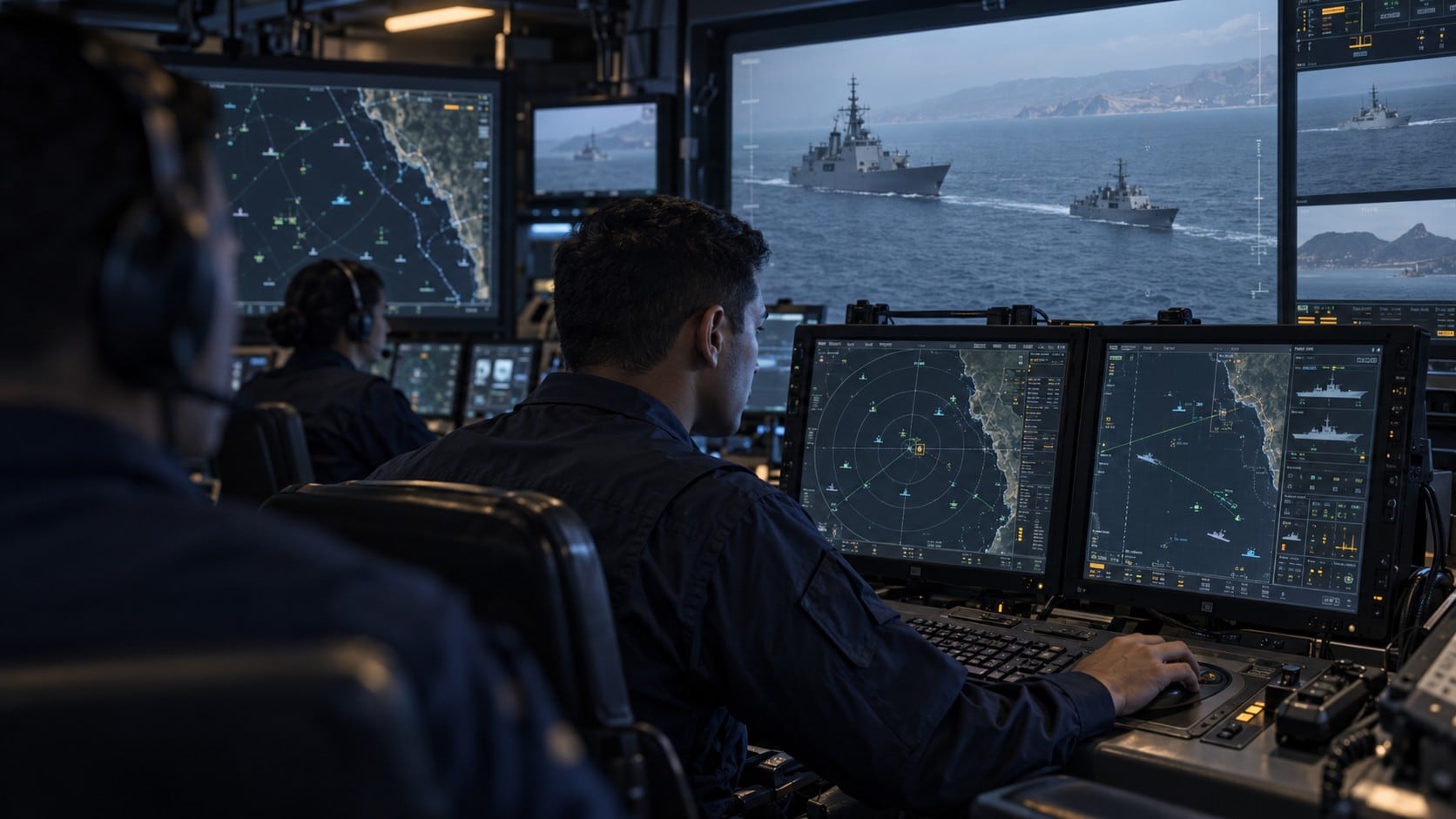
The Peruvian Navy is acquiring a frigate and an offshore patrol vessel designed by South Korea's HD Hyundai Heavy Industries and built in Peru by the state shipyard SIMA.
In April 2024 HD Hyundai Heavy Industries signed a contract with SIMA, Peru's state shipyard, for a frigate, an offshore patrol vessel and two landing craft for the Peruvian Navy. HD HHI supplies the designs, equipment and technical support, and SIMA builds the ships locally. The frigate is derived from HD HHI's HDF-3200 design and the patrol vessel from its HDP-2200 design.
AEON provided UX consulting on the combat system interface for the frigate and the offshore patrol vessel.
Technology trends
Written by AEON from public sources. It describes the field, not the project above.
South Korea's naval shipbuilders have spent the past decade turning domestic frigate and patrol-vessel designs into export products, and Latin America is the newest market. In April 2024 HD Hyundai Heavy Industries signed with Peru's state shipyard SIMA for a frigate, an offshore patrol vessel and two landing craft, supplying the designs, equipment packages and technical support while SIMA builds the hulls locally. The agreement also made HD HHI a long-term strategic partner in Peru's naval force development, and the Peruvian Navy has signalled that more frigates and patrol vessels may follow the first batch.
The model was refined in Southeast Asia. The Philippine Navy's two Jose Rizal-class frigates came from HD HHI, followed by a run of offshore patrol vessels and, in December 2025, a contract for two further 3,200-tonne frigates based on the same HDF-3200 design family, due by 2029. Repeat orders of a proven hull appeal to medium-sized navies: schedules are shorter, training carries over, and spares and maintenance can be shared across a class. Thailand took a similar path earlier with a frigate from DSME, now Hanwha Ocean.
The more revealing part of these programmes is the combat system, because that is where an exported hull becomes a warship, and Korean exports have taken different routes. Thailand's HTMS Bhumibol Adulyadej was built in Korea but fitted with Saab's 9LV combat management system. The Philippine ships use Hanwha Systems' Naval Shield, and Janes reports that the newer Philippine patrol vessels carry a later Naval Shield baseline than the frigates, with lighter consoles. For Peru, LIG Nex1, now LIG Defense & Aerospace, is supplying the combat systems, electronic warfare equipment and data links for the frigate and patrol vessel, and in July 2026 the company opened a regional office in Lima to support customers across Latin America.
The direction of travel is clear. Korean firms increasingly compete on the whole package rather than the hull alone: platform, combat management, sensors, data links, weapons and through-life support, usually with local construction or industrial participation as a condition of sale. Buyers, for their part, want sovereign access to software, interoperability with partner navies and data-link standards, and an upgrade path that does not leave them tied to a single foreign supplier. Modular combat-system architectures and in-country support offices are the industry's response, and they make a combat system a long-term relationship rather than a one-off delivery.
For operators, an imported combat system is where a navy's existing doctrine, training and language meet a foreign design. Localisation goes well beyond translating labels: alerting philosophy, task sequences and terminology have to match how that navy trains and fights, and they have to stay consistent across a class that may be built in more than one yard over a decade or more. The quality of that fit shapes how quickly crews reach confidence with a new ship.