Future Battlefield UX/CX Consulting (Integrated Unmanned Systems)
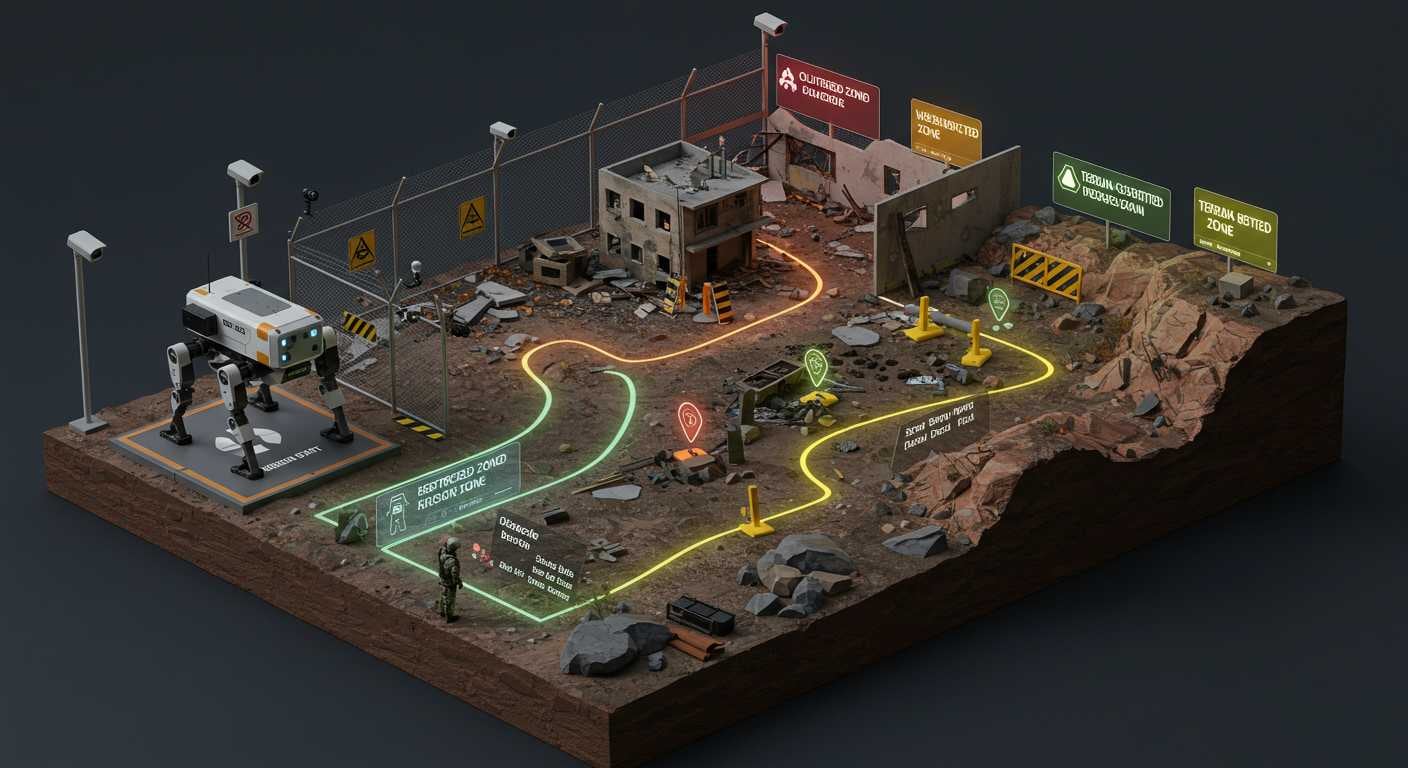
Future Battlefield UX/CX Consulting was a study of the near-term battlefield as unmanned systems become part of how forces are composed.
Armed forces are reorganising around unmanned systems as aerial, ground and maritime drones become a routine part of combat. Studies of the near-term future battlefield examine how these systems will be integrated into units, how they will operate alongside crewed forces, and what demand they create for industry.
AEON provided UX/CX consulting to LIG D&A on the integrated unmanned systems battlefield, surveying demand and directions worth developing.
Technology trends
Written by AEON from public sources. It describes the field, not the project above.
The war in Ukraine has done more than any doctrine paper to change how armies think about unmanned systems. In June 2024 Ukraine made its Unmanned Systems Forces a separate branch of the armed forces, bringing together drone units that had been spread across the army, National Guard and security service. A year later its commander-in-chief said the branch had been responsible for one in every three enemy targets hit in June 2025, and it was being merged with the Drone Line project that coordinates Ukraine's strongest drone units along the front.
The organisational change has been matched by a change in buying. A July 2025 CSIS study found that Ukraine had moved from centralised multi-year procurement to a system in which some 700 front-line units buy directly from approved commercial suppliers, supported by a separate budget for unmanned systems and the DOT-Chain digital marketplace. Private firms take products to a fairly mature stage at their own expense before the military buys them.
The United States has been trying to learn from this. The Replicator initiative, announced in August 2023, aimed to field thousands of low-cost autonomous systems within two years; according to the Congressional Research Service, only hundreds had been fielded by the deadline. Policy then moved further. A July 2025 memo from the Defense Secretary reclassified the smallest drones as consumables, to be handled more like ammunition than aircraft, delegated purchasing authority down to colonels and set a goal of a small expendable drone in every squad by the end of fiscal 2026. In November 2025 the Army said it wanted to buy one million drones over two to three years, against roughly 50,000 a year at the time.
Several lines of force design come out of this. Drones are being treated as a munition rather than a platform, bought in volume and expected to be lost. Units at every echelon are getting their own unmanned capability, while specialist formations take on the most demanding missions. Air, ground and maritime systems are expected to work together, and counter-drone defence has become a requirement for every unit rather than a specialist task. Industry is being asked to deliver at commercial speed, with software and payloads that can be updated in the field.
The constraint that shows up everywhere is people. Every drone, however cheap, needs someone to launch, guide, supervise or recover it, and trained operators are scarce. That puts pressure on interfaces that non-specialists can learn quickly, on control stations that let one person manage several vehicles, and on ways to deconflict crowded airspace full of friendly drones. As autonomy takes on more of the flying, the human role moves towards judgement: choosing targets, setting limits and deciding when to intervene. Designing for that role is now part of designing the force.