GR-LIG Multi-Robot Control
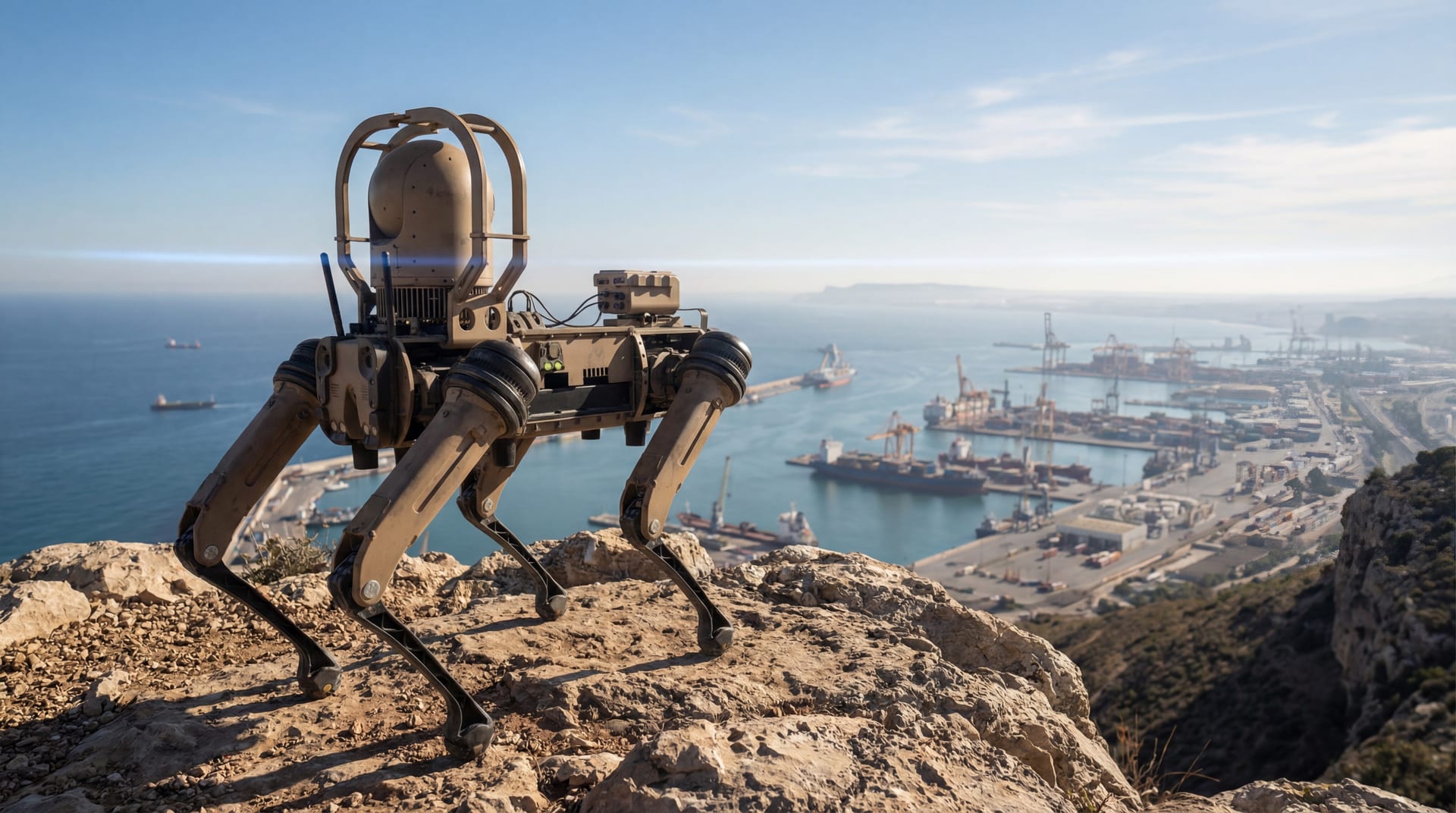
GR-LIG Multi-Robot Control is a control package for operating several unmanned ground robots, including Ghost Robotics quadrupeds, as one team.
Ghost Robotics is a Philadelphia-based maker of legged robots, best known for the Vision 60 quadrupedal unmanned ground vehicle. LIG Nex1, now LIG D&A, completed the acquisition of a controlling 60 per cent stake in the company in July 2024. Multi-robot control refers to the software and procedures that let operators task and monitor several robots together rather than one at a time.
AEON provided service design and UX for a multi-robot control package spanning the control room, field operators and payload suppliers.
Technology trends
Written by AEON from public sources. It describes the field, not the project above.
Legged robots entered military service through the least dramatic door: base security. In March 2021 Tyndall Air Force Base in Florida received quadrupedal unmanned ground vehicles from Ghost Robotics and Immersive Wisdom, described as the first of their kind integrated onto a military installation. They were used as mobile sensors that could patrol remote parts of the base, so that human defenders could concentrate elsewhere.
Since then, experiments have moved closer to combat. US Marine Corps special operators have tested Vision 60 robots fitted with Onyx's SENTRY remote weapon system, which detects targets and alerts a human who decides whether to fire. The command stressed that it was not fielding the capability and that weapons are only one possible payload alongside sensors and electronic warfare; the robots were also reported to be doing tunnel work and perimeter security. In August 2024 the US Army's Operation Hard Kill at Fort Drum showed a Vision 60 carrying a carbine on a small turret as part of a counter-drone layer, operated from tablet-like controllers.
Other armies are on a similar path. South Korea's procurement agency announced in August 2024 that a four-legged counterterrorism robot developed with Hyundai Rotem and Rainbow Robotics would be trialled with Army special forces and a forward division, for search, reconnaissance and sentry duty. China drew attention the same year when its forces showed a rifle-carrying robot dog under remote control in the Golden Dragon exercise with Cambodia, presented as a member of urban combat teams.
The more important shift is from single robots to teams. The clearest public demonstration remains the DARPA Subterranean Challenge, which team CERBERUS won in September 2021 with four ANYmal C legged robots working alongside other platforms to explore underground courses and report what they found. Military practice is heading the same way: legged robots for stairs, rubble and tunnels, drones for overwatch, and wheeled or tracked vehicles to carry them forward. The robots are increasingly treated as payload carriers, with sensors, manipulators or effectors from different suppliers attached through common interfaces. That makes payload integration, software updates and shared autonomy as important as the robot's legs.
For operators, a robot team changes the job. Instead of driving one machine, a person allocates tasks across several and watches for the moments when one needs help. Responsibility is split between a control room with the wider picture and soldiers in the field who see what the robots see up close, and each needs to know what the other has authorised. Clear tasking by area or objective, readable status for every robot and smooth handover of control between locations decide whether a team of robots reduces workload or adds to it.