Home Appliance Device Mobile App UX/UI Design
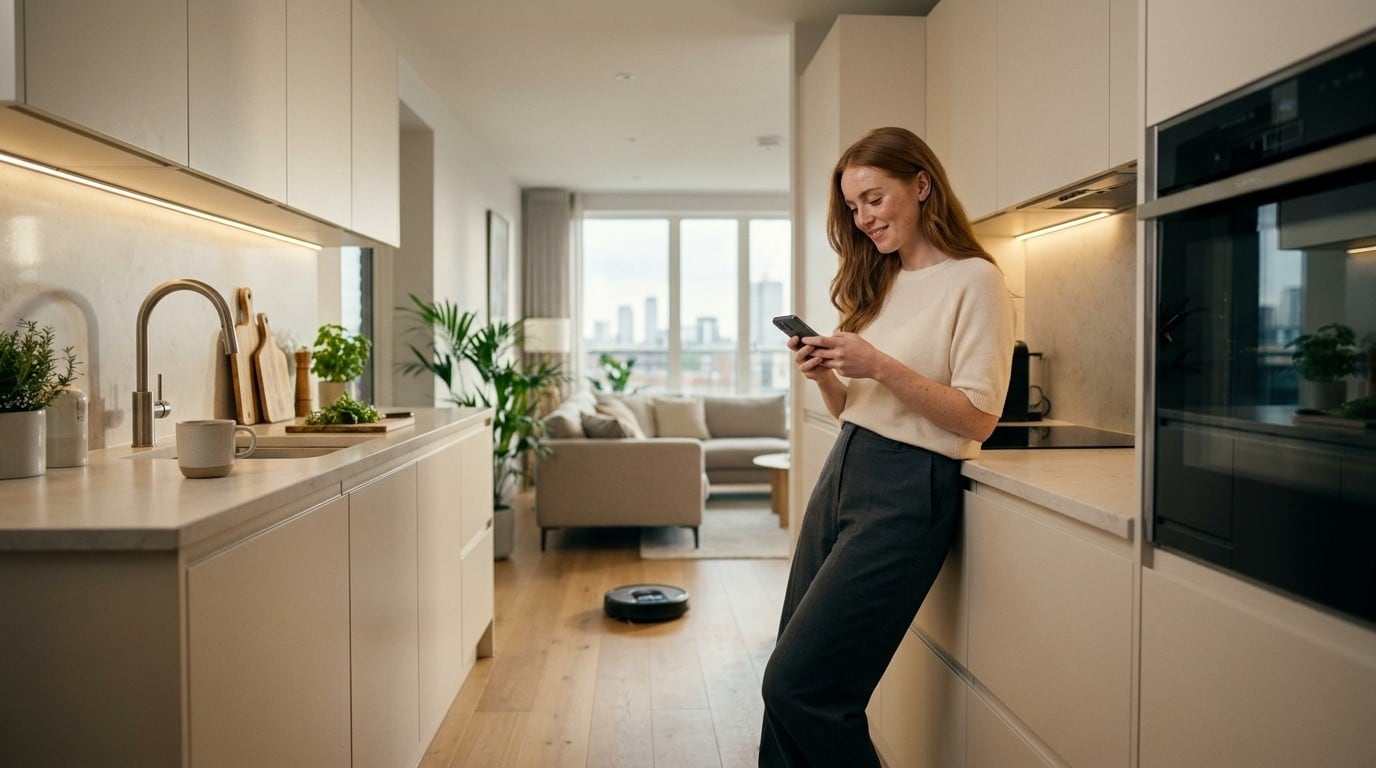
Buy a different appliance and you should not have to learn the app again.
When every product is controlled its own way, the customer pays for the inconsistency. The work was finding the frame that holds across product lines — the flow and the interface for the appliance app, designed on a structure the categories share.
Technology trends
Written by AEON from public sources. It describes the field, not the project above.
For most of the past decade, buying a connected appliance meant installing its maker's app. A household with a refrigerator, a washer and an air conditioner from three brands ended up with three apps, three accounts and three ways of saying that a cycle had finished. Since about 2022 the industry has been trying to undo that on two tracks at once: a device-level standard that any platform can speak, and agreements between appliance makers to let their clouds talk to each other.
The device-level track is Matter, the standard run by the Connectivity Standards Alliance, which launched in late 2022 with lights, locks and thermostats. Samsung added Matter control to its SmartThings app that December and supports multi-admin, so the same device can be controlled from several platforms. Appliances followed a year later. Matter 1.2 added refrigerators, room air conditioners, dishwashers, laundry washers, robot vacuums and air purifiers, each defined by a deliberately limited set of functions: remote start, progress notifications, a handful of modes and error alerts. The standard does not try to describe everything a machine can do. It describes what every app should be able to do with it.
That common subset is already visible in platform apps. When Apple's Home app gained support for Matter robot vacuums in iOS 18.4, it offered start, stop, cleaning presets and return-to-dock, while room mapping still required the manufacturer’s own app. The pattern is becoming general. Platform apps handle the fundamentals across brands, and the maker's app keeps the depth: detailed programmes, maintenance and diagnostics.
The cloud track matters most for large appliances, which mostly connect over Wi-Fi to their makers' own services. Through the Home Connectivity Alliance, an industry group founded in 2022, Samsung and LG began connecting SmartThings and ThinQ in 2023 so that either app could operate the other’s appliances, with energy management planned for a later version of the specification. For two rivals to expose their machines in each other's apps would have been hard to imagine in the mid-2010s. It shows how far the expectation of a single place to manage the home has travelled.
The result is a layered arrangement rather than a single winner, and it changes what people experience. The same washer may now appear in a platform app, in a rival's app and in its own, each drawing it slightly differently. For users, the important things are that a cycle, a state or an error is called the same thing wherever it appears, that basic actions behave identically across apps, and that the reason to open the maker's app is the depth it offers rather than the lack of anywhere else to go. Designers increasingly have to assume that their device will be shown through someone else's interface, and to make its names and states clear enough to survive the translation.