International Design Award Jury Brochure
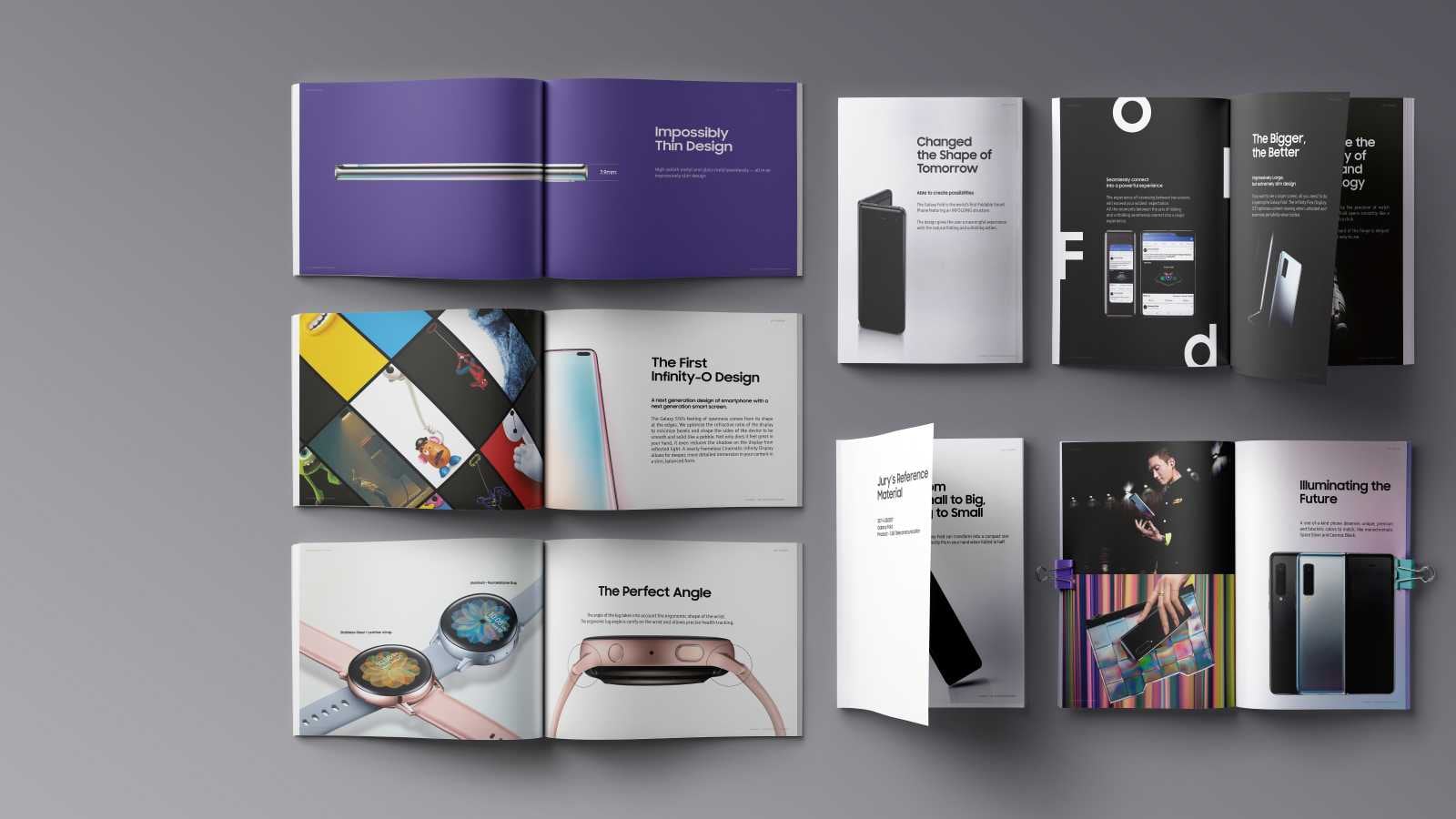
A hall the size of a gymnasium, thousands of entries, and a few seconds each.
iF and Red Dot jurors move through the room on their feet. A brochure gets picked up, turned, put down, and then it is the next one's turn.
At that speed the layout is the argument. What the product is has to arrive before the juror has decided how long to give it.
Six Galaxy products, printed on a stock chosen to survive a day of being handled. We designed it and saw it through printing and binding.
Technology trends
Written by AEON from public sources. It describes the field, not the project above.
Since the late 2010s, the large international design awards have been asked to judge more kinds of work, by more explicit standards, under conditions that have not always been kind. iF and Red Dot built their reputations on expert juries examining real objects in a hall, and both still receive thousands of entries a year from manufacturers that treat a win as a mark of credibility.
The pandemic tested that model early. Red Dot's 2020 product design jury, due to gather in Essen in early March, completed its work with a few changes just before Germany's first lockdown; that summer its brands and communication design jury evaluated every entry online for the first time. The organisers reported that the virtual format worked well, yet said they hoped it would remain the exception. Screen-based work translates readily to remote review; a chair, a kettle or a television is harder to judge from photographs, and hands-on examination has kept its place in the leading product awards.
The criteria have shifted too. For its 2025 edition iF replaced its former "Impact" criterion with sustainability, which now stands beside idea, form, function and differentiation as one of five criteria, supported by optional questions and accreditations through which entrants can document social and environmental claims. Jurors are being asked to weigh evidence that cannot be seen on a plinth: materials, repairability, packaging and the life of a product after sale.
The objects themselves have changed. Interfaces, services and whole experiences now compete in categories of their own, and a phone or an appliance is judged as much for its software as for its housing. Samsung Electronics, a regular winner, shows the breadth: its 77 iF awards in 2026 spanned nine disciplines, including UX and UI, recognising its One UI 7 software and a smart-home feature that analyses appliance status and usage patterns alongside televisions, audio products and packaging. For a jury, that means reading behaviour and flows, not only proportion and finish.
For the people who judge, specify and use designed products, these shifts move evaluation beyond appearance. Experts increasingly have to assess claims about software behaviour, accessibility and environmental effect that only reveal themselves in use, which makes clear evidence and comparable presentation part of good design communication. For everyday users, an award label becomes a signal about more than looks, and it is worth something only if the qualities it rewards, such as coherent interaction, durability and ease of use, are the ones people meet once the product is in their hands.