Life Care Robot Service for UX and Application Development
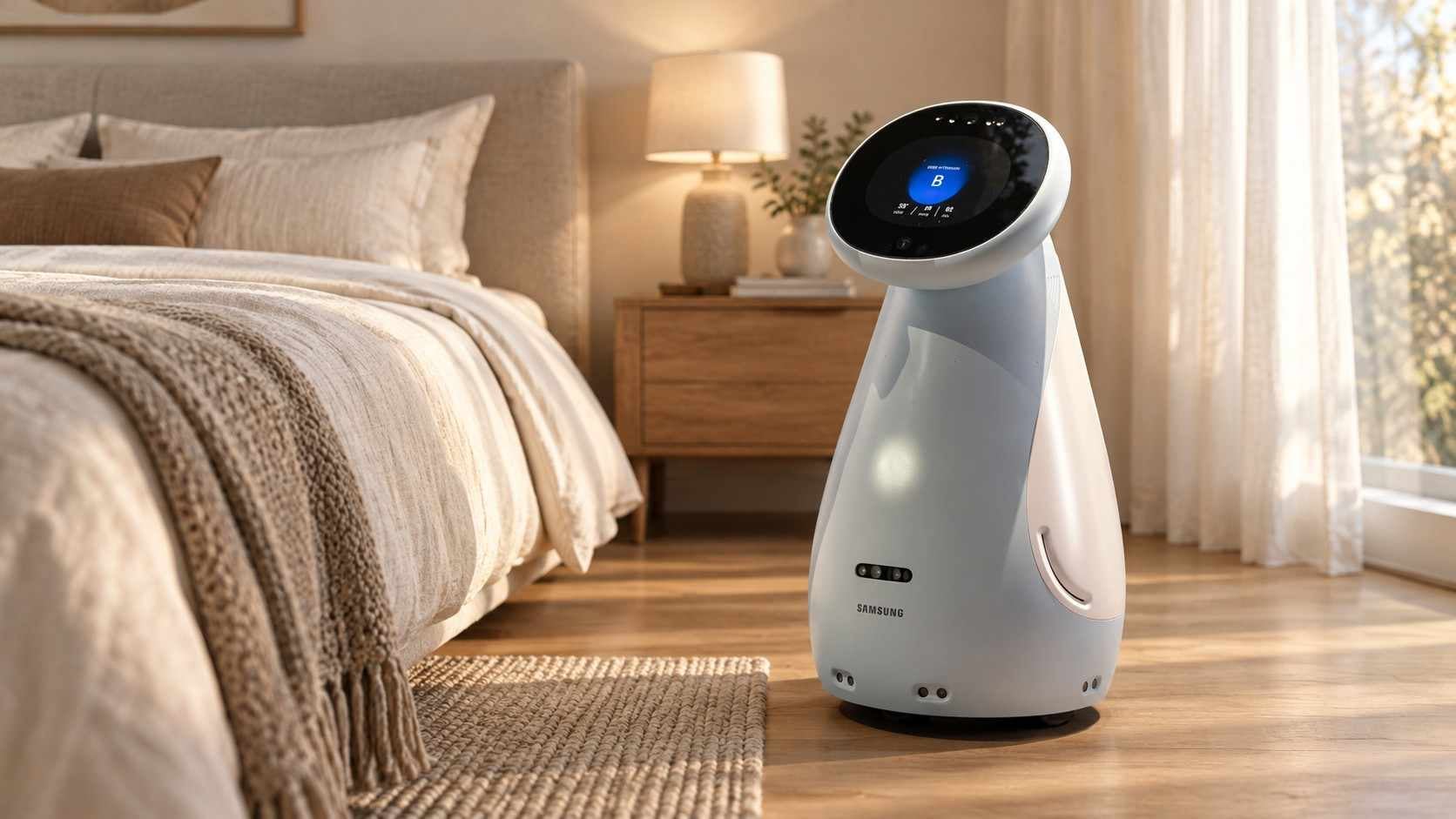
The robot lives with an older person. It reports blood pressure and sleep to someone who has never asked a machine for anything.
At home the users are elderly people and their families. Readings — blood pressure, heart rate, sleep — have to land with someone who is not comfortable with devices.
Whether a result is given as a number or said in words is not a matter of presentation; it decides whether it is understood. And a robot that speaks first is a different thing from one that waits, so when it does each had to be settled — along with how much belongs to the robot and how much to the family's remote scheduling app.
We drew on our earlier work on the URC home robots and designed the robot screens and the app flow together, taking the app far enough to be demonstrated. It was shown at CES the following year.
Technology trends
Written by AEON from public sources. It describes the field, not the project above.
Since the late 2010s, the idea of a robot that keeps an older person company at home has moved from trade-show demonstration to small public programmes, and then to a new generation of devices built on large language models. The pressure behind it is demographic. The World Health Organization projects that one person in six worldwide will be aged 60 or over by 2030, and that the share of over-60s will nearly double between 2015 and 2050. Health systems and families alike are looking for ways to support people who want to go on living in their own homes.
In 2019 the category had its showcase moment. At CES that January, Samsung gave the first public demonstration of Samsung Bot Care, presented as a robot that helps people manage their daily health routines, alongside sibling robots for air quality and retail. Demonstrations like these showed what was possible on a stage. The harder questions, such as reliable sensing in cluttered homes, who is responsible when a reading looks wrong, and what a machine should do when it cannot reach anyone, took longer to answer.
Public deployment came from a different direction: simpler devices focused on companionship rather than measurement. In 2022 the New York State Office for the Aging began delivering ElliQ, a tabletop companion from Intuition Robotics, to the homes of 800 older adults as part of an effort against social isolation. The device was promoted as proactive, opening conversations rather than waiting to be addressed. That stance, once a design experiment, is now treated as a defining feature of the category.
Generative AI has widened what such devices claim to do. In April 2025 Samsung and Google Cloud announced that Ballie, Samsung's rolling home companion, would use Gemini models for natural conversation, reminders and proactive help around the home. Conversation is now relatively easy to build, so the open questions have moved towards consent, privacy in shared households, and how much an always-present machine should volunteer about what it notices. Anything that measures vital signs or offers medical advice falls under medical-device rules, which keeps most companion products on the wellness side of that line, and independent evidence on health outcomes from home robots is still limited.
For older users, the interaction problem is less about making the robot clever than about making it legible: when it will speak, what it is about to do, and what happens to what it hears. For relatives and carers who receive information at a distance, the challenge runs the other way, getting enough to feel reassured without turning someone's home into a monitored space. Designs that leave the older person in charge of what is shared, and that fail gracefully when the technology does, are the ones most likely to be trusted.