Link Emulator UX Consulting
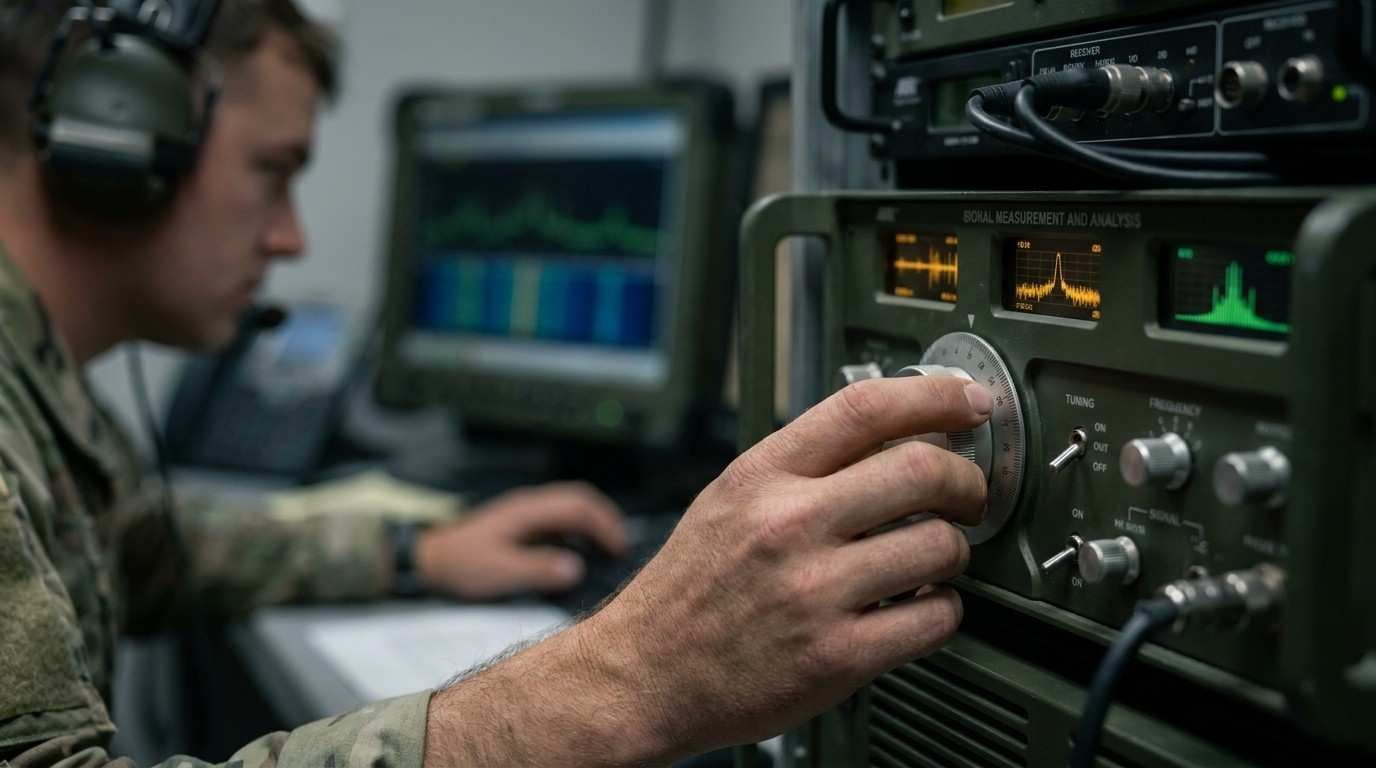
A link emulator is a test instrument that simulates tactical data link networks such as Link 16 and Link 22, so that data link equipment can be developed, tested and analysed without live participants.
A link emulator reproduces the participants and message traffic of a tactical data link network, such as Link 16 or Link 22, in a laboratory or test environment. Instruments of this kind are used to develop and integrate a platform's data link equipment, to check that its messages conform to the link standards, and to record and analyse network traffic, reducing the need for live units in testing.
AEON provided UX consulting for a link emulator used for tactical data link emulation and analysis.
Technology trends
Written by AEON from public sources. It describes the field, not the project above.
Tactical data links are how ships, aircraft and command posts share a common picture in near real time. NATO navies have long relied on Link 11 and Link 16; Link 22, a beyond-line-of-sight successor to Link 11, is now entering service, while the Joint Range Extension Applications Protocol (JREAP) carries J-series messages over satellite and IP networks. Few platforms run only one of these, and the complexity lies in making them work together.
Link 22 adoption has gathered pace. During the Clemenceau 25 deployment, the French Navy tested Link 22 with the Charles de Gaulle carrier strike group, exchanging data with US and Japanese ships in exercise Pacific Steller, with the aim of eventually replacing Link 11. In July 2026 USS Mount Whitney became the first US warship to integrate and operate Link 22 organically while underway, connecting with the German frigate Hamburg during BALTOPS 2026.
Terminals are changing too. MIDS JTRS, a four-channel software-defined radio that runs the Link 16 waveform alongside up to three other protocols, is being supplied for more than 45 US and international platform types, with naval vessels among the platforms on which it is fielded. Software-defined terminals make it easier to add waveforms and cryptographic updates, but they also multiply the configurations that must be proved interoperable.
That is why testing and emulation have become an industry of their own. Tools such as Curtiss-Wright's TCG BOSS script and generate messages, simulate networks, emulate terminals in real time and analyse results afterwards, and are used to certify that data link implementations conform to military standards; they can also populate a test with virtual command posts, weapons and threats. Sea trials remain essential: in 2013 Finland's acceptance testing of its multi-link data link processor exercised Link 22, MIDS/Link 16 and JREAP together aboard the minelayer Uusimaa, and trials of this kind have become routine as navies integrate several links through a single processor.
The direction is towards multi-link gateways, data forwarding between networks, dynamic network management and crypto modernisation, with link managers coordinating a growing web of participants across services and nations. The more links a force uses, the more it depends on laboratories and emulators that can reproduce realistic network traffic before equipment goes to sea.
For operators, the hardest part is often invisible. Link managers and interface control officers must understand the state of several networks at once, notice when tracks are duplicated or dropped, and diagnose faults that may lie in a terminal, a gateway or a message translation. Test and monitoring tools that make network behaviour legible, rather than burying it in message logs, help engineers in the laboratory and operators at sea alike.