MDE Base Service UX Development
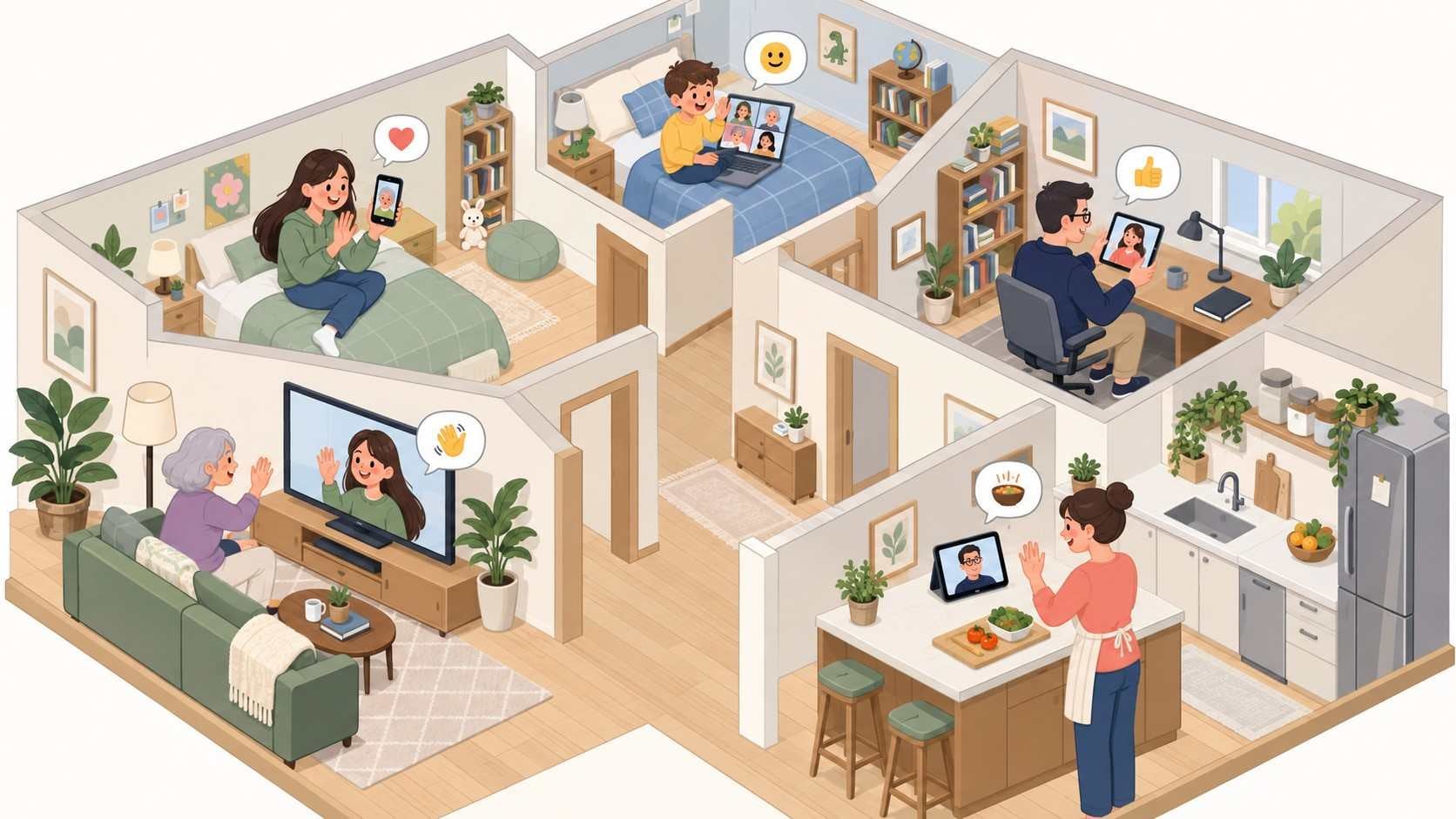
Multi Device Experience — the promise that what you were doing on one device is already waiting on the next.
A handover is only believable when it is invisible. The design question is less the moment of transition than what the second device already knows by the time you pick it up — and how much of that has to be settled before the first one is put down.
This was the base service in the sense the word carries here: the first one, written so the rest could be cut from it. A phone, a tablet, a television and a computer do not divide the work the same way, so what gets decided at the centre is not a screen but the part all of them have to agree on.
Writing something to be inherited is a different job from designing it. A choice that is merely convenient at the centre becomes expensive at every edge, and it reaches each device team as a constraint rather than a suggestion.
UX development for the service across the range.
Technology trends
Written by AEON from public sources. It describes the field, not the project above.
Moving work between devices has been a promise of every large ecosystem for a decade, but its form keeps changing. Early continuity features passed a single task from one screen to the next. The current generation increasingly lets one device take direct control of another, and pressure from regulators and industry partners has begun to open these features beyond a single brand.
Apple's macOS Sequoia, released in 2024, added iPhone Mirroring, which shows and operates a locked iPhone in a window on the Mac, with keyboard and trackpad control, drag-and-drop file transfer and iPhone notifications answered from the desktop. Samsung's Multi Control takes a related approach between Galaxy phones, tablets and Galaxy Book laptops, letting one keyboard and pointer move across them. The emphasis has moved from handing a task over towards treating several devices as one workspace.
Sharing has been consolidated too. At CES 2024 Google and Samsung merged Nearby Share and Quick Share into a single Quick Share service across Android phones and Chromebooks, with Windows PCs added through manufacturers, and with discovery settings that let people choose between everyone, their contacts or only their own devices. Two overlapping tools on the same platform had been a steady source of confusion; one name and one behaviour removed it.
Regulation is now pushing the boundary further. In March 2025 the European Commission specified interoperability measures under the Digital Markets Act requiring Apple to open nine iOS connectivity features to other manufacturers, among them showing iPhone notifications on third-party smartwatches, peer-to-peer Wi-Fi transfers and easier pairing. Continuity that was once a reason to stay inside one ecosystem is, at least in Europe, becoming something devices from other brands can expect to share.
The number of personal devices keeps growing alongside these changes. A typical household may now combine phones, tablets, laptops, watches, earbuds and televisions from more than one company, and cross-device features are judged less by what they can do in a demonstration than by whether they work every time on the hardware people actually own.
For users, the value of continuity depends almost entirely on predictability. People need to know which device is in control, where a file or call will land, and who nearby can see their device. When those questions have obvious answers, several screens feel like one tool; when they do not, they feel like several tools competing for attention.