Naval Combat System Seminar — Next-Generation CIC Multifunction Console Design Consulting (Exhibit)
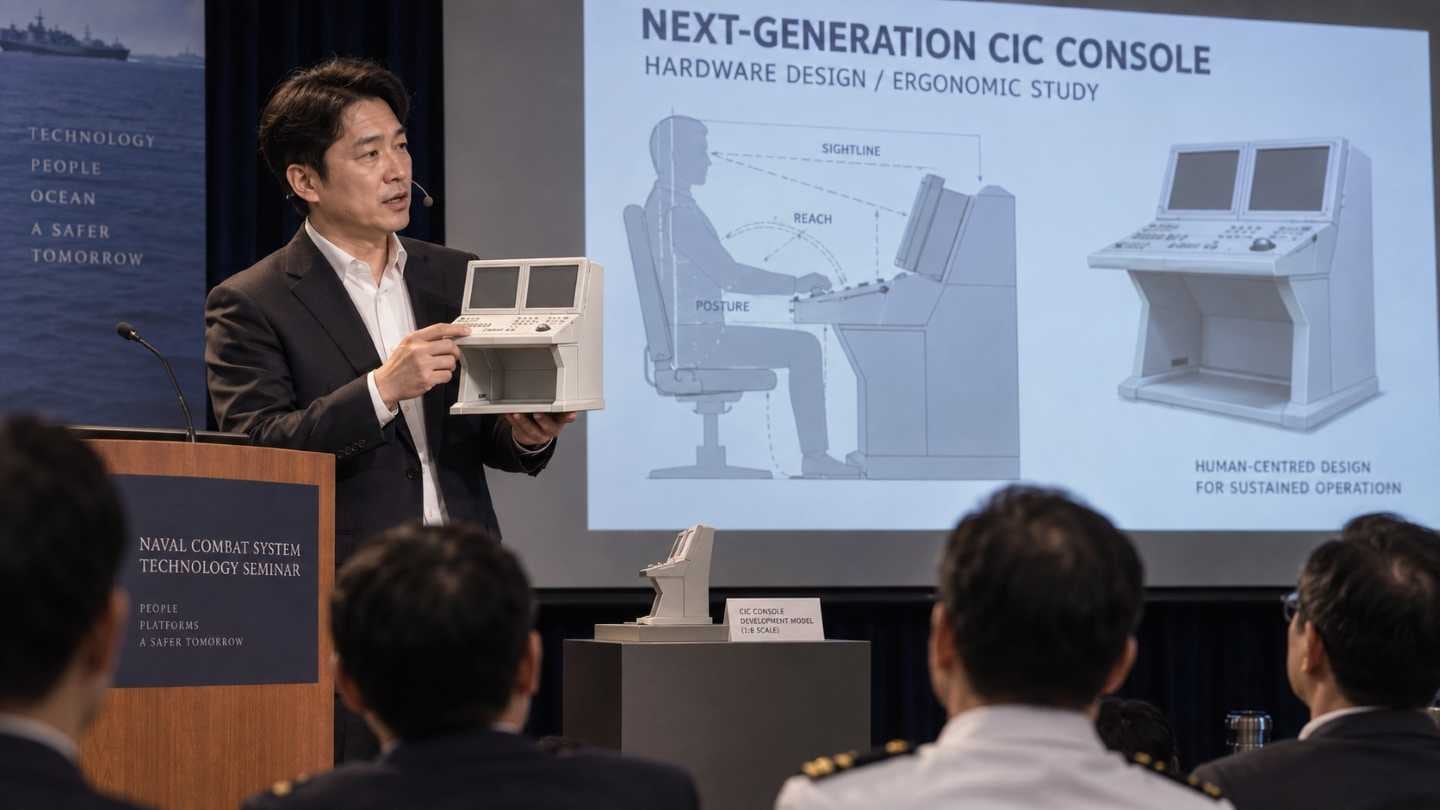
A CIC multifunction console is the general-purpose operator workstation of a warship's combat information centre.
The combat information centre (CIC) is the part of a warship where its sensor data is compiled into a tactical picture and its weapons are directed. The multifunction console is the standard operator workstation of the combat system there; a single console type can serve different warfare roles through software, which simplifies training, maintenance and upgrades across a ship and a fleet.
AEON carried out hardware design consulting for a next-generation CIC multifunction console and produced a 3D-printed model of the design, exhibited at the naval combat system technology seminar hosted by LIG Nex1 in 2015.
Technology trends
Written by AEON from public sources. It describes the field, not the project above.
Warship operations rooms are being redesigned for the first time in a generation. The traditional model, rows of identical consoles each tied to a fixed warfare role, is giving way to spaces built around shared networks, reconfigurable positions and large collaborative displays, with artificial intelligence beginning to appear as an assistant to the operators.
Console makers have responded with new workstation concepts. Saab's Future Operator Workspace, first shown at DSEI 2023, combines ergonomic design with the company's 9LV combat management software and is intended to reduce mental load and fatigue and shorten reaction times; Saab developed it in about eight months with the University of South Australia and an Adelaide manufacturer. The emphasis on human-centred design, rather than on raw display size, is telling.
The Royal Navy's new frigates show two versions of the shared-infrastructure idea. On Type 26, a ship-wide digital backbone links common consoles and open-architecture software to server farms over a high-bandwidth network, and the INTeACT combat management system can be extended with downloadable software modules and reached from anywhere on board using handheld tablets. For Type 31, Thales's TACTICOS brings multi-purpose consoles that can be reconfigured for different operators, larger bulkhead displays for the command team, and rule-based monitoring that alerts operators only to contacts meeting defined criteria, while the commanding officer keeps weapon release authority.
Artificial intelligence has also been tested at sea. In 2021, during Exercise Formidable Shield, the Royal Navy trialled the Startle and Sycoiea applications aboard HMS Dragon and HMS Lancaster, the first giving live recommendations and alerts to sailors monitoring the air picture and the second evaluating threats and suggesting weapon assignments. Decision aids of this kind now feature on most combat management roadmaps.
Taken together, these programmes point to an operations room in which the console is a general-purpose access point, the tactical picture is shared on large displays, functions arrive as software updates, and machine assistants filter and prioritise information before it reaches a human. Pressure on crew numbers pushes in the same direction, since fewer people must handle more sensors and more simultaneous threats.
For operators, the challenge is coordination as much as individual workload. When positions can change role and much of the picture is shared, the team needs a common understanding of who is responsible for what and what the automation is doing. Interfaces that make machine recommendations transparent, keep alerting under control and support handover between people will matter more than any single piece of console hardware.