Naval Engagement-Class Analysis Model (Build-I) UX/UI Development
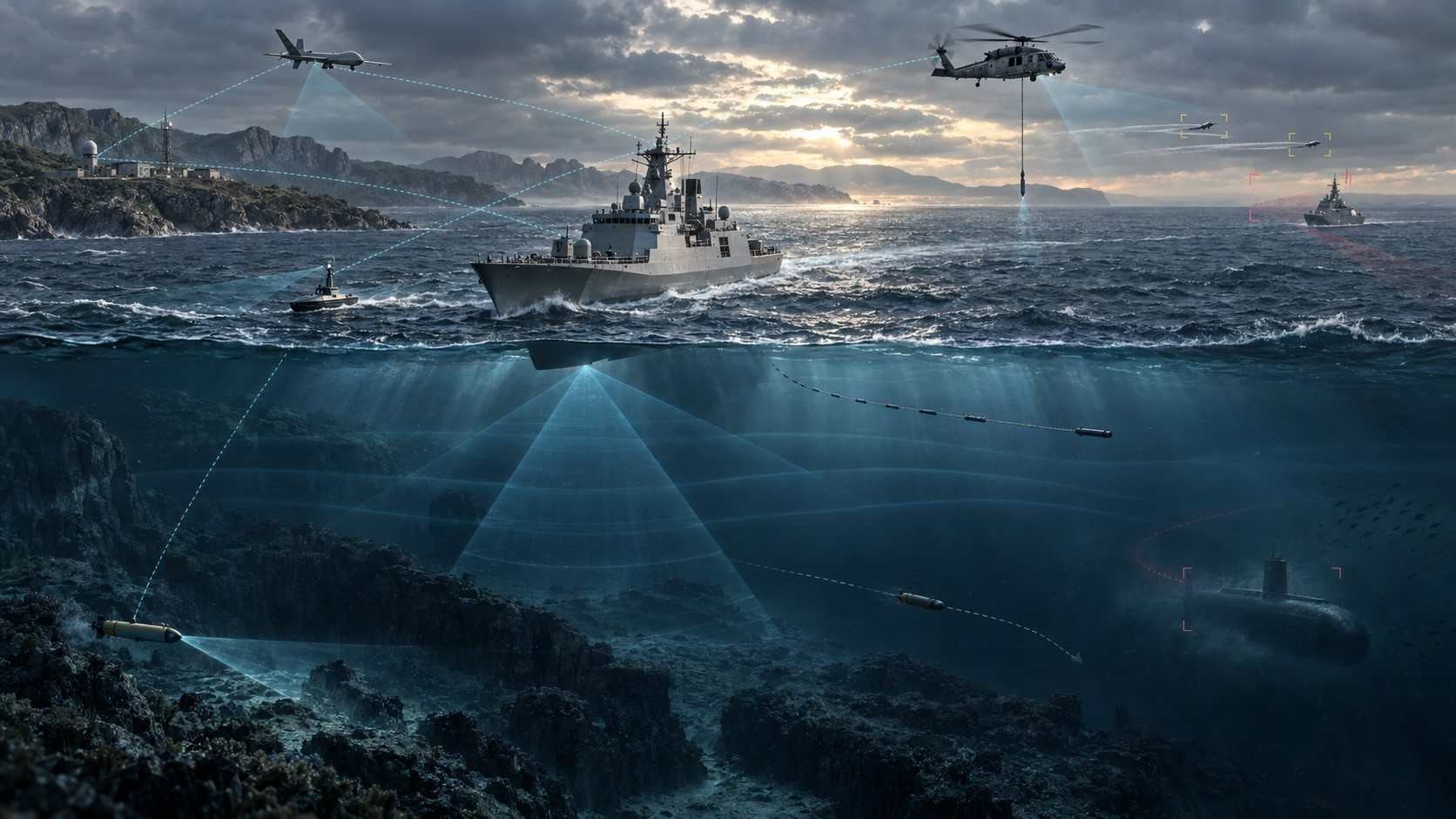
The Naval Engagement-Class Analysis Model is a simulation model for analysing a single naval engagement; Build-I is its initial build.
An engagement-level analysis model simulates a single naval engagement in detail, representing the platforms, sensors, weapons and threats involved. In the usual hierarchy of combat models it sits between engineering models of individual equipment and mission- or campaign-level models of whole operations, and it is used to examine the effectiveness of weapon systems and tactics. Build-I is the initial build of this model.
AEON developed the UX/UI standards for the model's initial build.
Technology trends
Written by AEON from public sources. It describes the field, not the project above.
Defence analysts usually describe combat models as a hierarchy. Engineering models represent a single sensor or weapon in physical detail; engagement models pit one or a few platforms against a threat; mission and campaign models aggregate whole forces over days or weeks. The engagement level is where physics meets tactics, and it is typically run many times over, varying geometry, timing and threat behaviour, to estimate how a weapon system or tactic performs across a spread of outcomes rather than in a single scripted case.
The tools behind this work are converging with those used for testing and training. BAE Systems' MIMESIS models seabed, weather and underwater acoustics together with ships, submarines and their combat management systems, sensors and effectors, and is offered for experimentation, for test and integration, where it provides digital twins of warfighting systems, and for training. In Britain, Dstl's Maritime Experimentation Lab at Portsdown West is a ministry-owned synthetic environment for trying out maritime command and control concepts, and in 2023 it sought development of a combat management system emulator with CMS-like operator displays and open interfaces such as DIS.
Artificial intelligence is the second shift. Research centres are experimenting with learning agents that can play out very large numbers of engagements, generating courses of action that human planners might not consider. At the US Naval War College, two students built a classified tool, recognised in June 2026, that uses statistical methods to estimate how likely different options are to succeed given each side's strengths and weaknesses. The common aim is reproducibility: results that can be rerun and compared rather than drawn from a single game.
The third shift is connection. Analytical models, training simulators and real combat systems increasingly share data standards, so that a scenario built for analysis can feed training and the reverse. US Fleet Forces and NSWC Corona recently showed the Chief of Naval Operations new capabilities added to the Navy's surface and air live, virtual and constructive training environments, linking sailors aboard ships with shore facilities. In this setting a digital twin is less a single product than a family of models of the same system at different levels of fidelity.
The weakness of all of this is credibility. A model is only as useful as its data and assumptions, and the more autonomous and interconnected a simulation becomes, the harder it is to see why a result came out as it did. Verification, validation and accreditation, and clear documentation of what each model does and does not represent, remain the slow, necessary work behind any headline about AI wargaming.
For the people who run these models, the interface is part of the method. Analysts have to set up scenarios consistently, read large result sets and explain them to decision-makers who did not build the model. Common conventions for how scenarios, entities and outcomes are presented make studies comparable across teams and over time, and tools that expose their assumptions rather than hide them are the ones commanders are most likely to trust.