Next-Generation Dreams UX Consulting Development
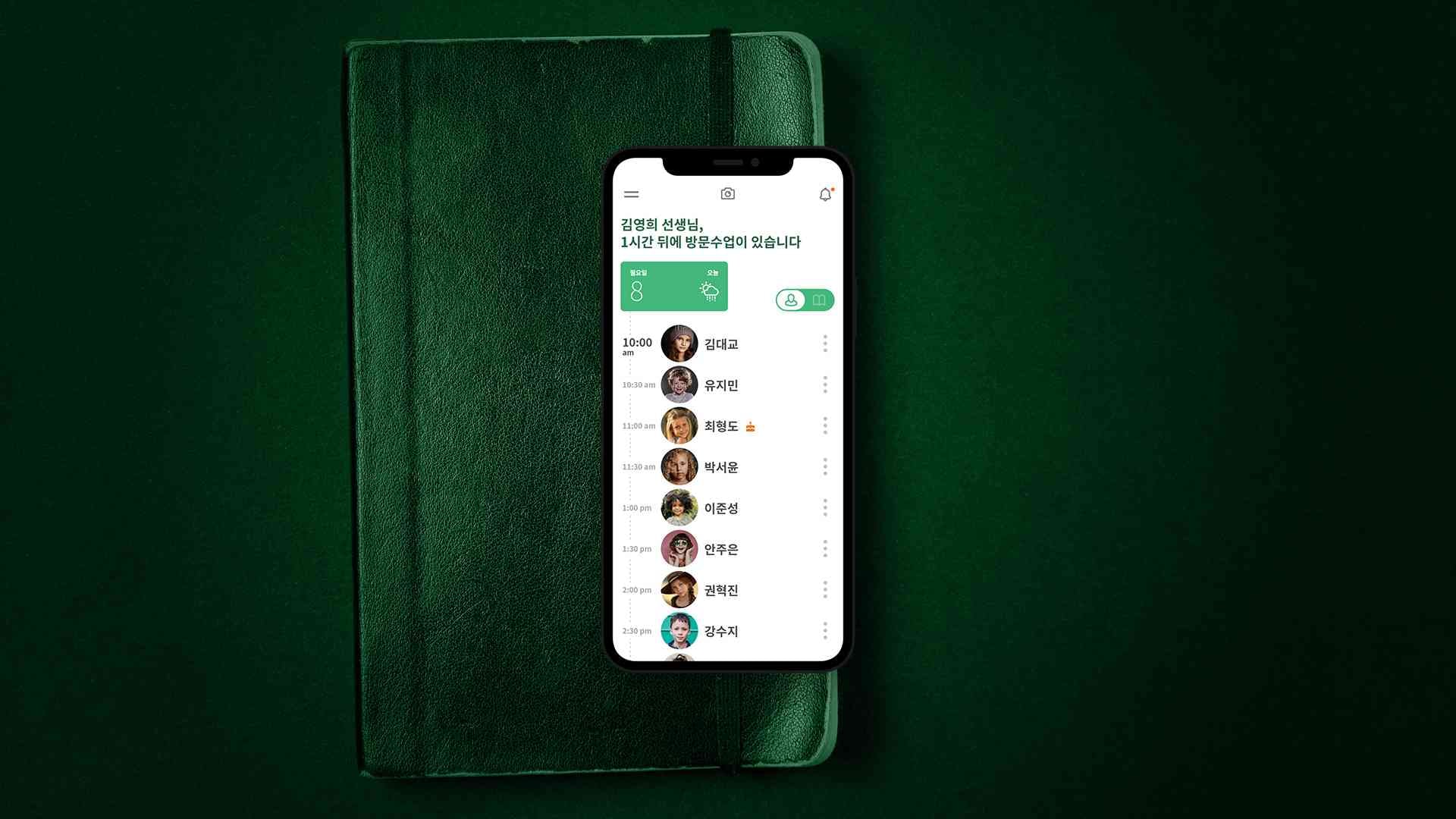
The teachers had done this on paper for decades. The system was newer than the method and worse at it.
Home-visit tutoring still ran on paper. A teacher on their round, a branch director, a regional manager, head-office staff and executives — five different days, one system, and it served none of them well.
A tool that loses to paper is not losing on features. So the question was what each role actually does in the course of a day, and how plain the screens have to be for people who have never needed them to be anything else.
We ran focus groups on the work itself and on their experience of the system, and proposed a UX direction and baseline guidelines out of what came back.
Technology trends
Written by AEON from public sources. It describes the field, not the project above.
Software for people who work away from a desk, such as field engineers, care workers, sales representatives and tutors on home visits, has gone through several phases since the first rugged handhelds. Tablets and smartphones made the hardware cheap, and cloud services made the data shared. One observation has nevertheless proved durable: paper is far harder to displace than technology plans assume. In The Myth of the Paperless Office, published in the early 2000s, Abigail Sellen and Richard Harper explained paper's persistence through its affordances, the physical qualities that make it easy to carry, fold, mark up and share, and argued for paper and digital tools working together rather than for the elimination of one.
Field software has since developed specific answers to those strengths. Active styluses brought handwriting back to tablets. Offline-first design became a standard pattern on the web as well as in native apps: Google's web.dev guidance sets out techniques for building applications that keep working without a network, using service workers and local caches, which matters to anyone working in basements, lifts or rural areas. Low-code platforms let organisations adjust forms and workflows without waiting for a major release.
Method has changed as much as technology. Public-sector digital services set a reference point: the UK government's Service Standard begins by requiring teams to understand users and their needs before settling on a solution. In enterprise software that has meant more research where the work actually happens. Nielsen Norman Group describes field studies as research carried out in the user's own setting, where observation exposes workarounds and constraints that a meeting-room interview tends to miss. For mobile roles the unofficial workflow, a notebook in the car, a message thread among colleagues, a spreadsheet kept at the local office, is often the real system.
The newest wave is AI assistance for frontline staff: summarising a customer's history before a visit, drafting notes from speech, or proposing the next task. These features suit people who spend the day moving between locations, but they inherit an old problem. If the underlying record is thin because entering data is a chore, the assistant can only summarise the gaps. Adoption still depends on whether the basic act of recording is quicker than the method it replaces.
For workers in the field, a tool is judged in seconds and in context: one hand busy, a customer waiting, a weak signal. The lesson of the past decade is that such users rarely resist technology as such; they resist overhead. Software earns its place when it removes steps people already find tedious, respects routines that already work, and gives something back, such as information they could not get from paper, in return for what it asks them to record.