North America Luxury Built-in UI Guidelines
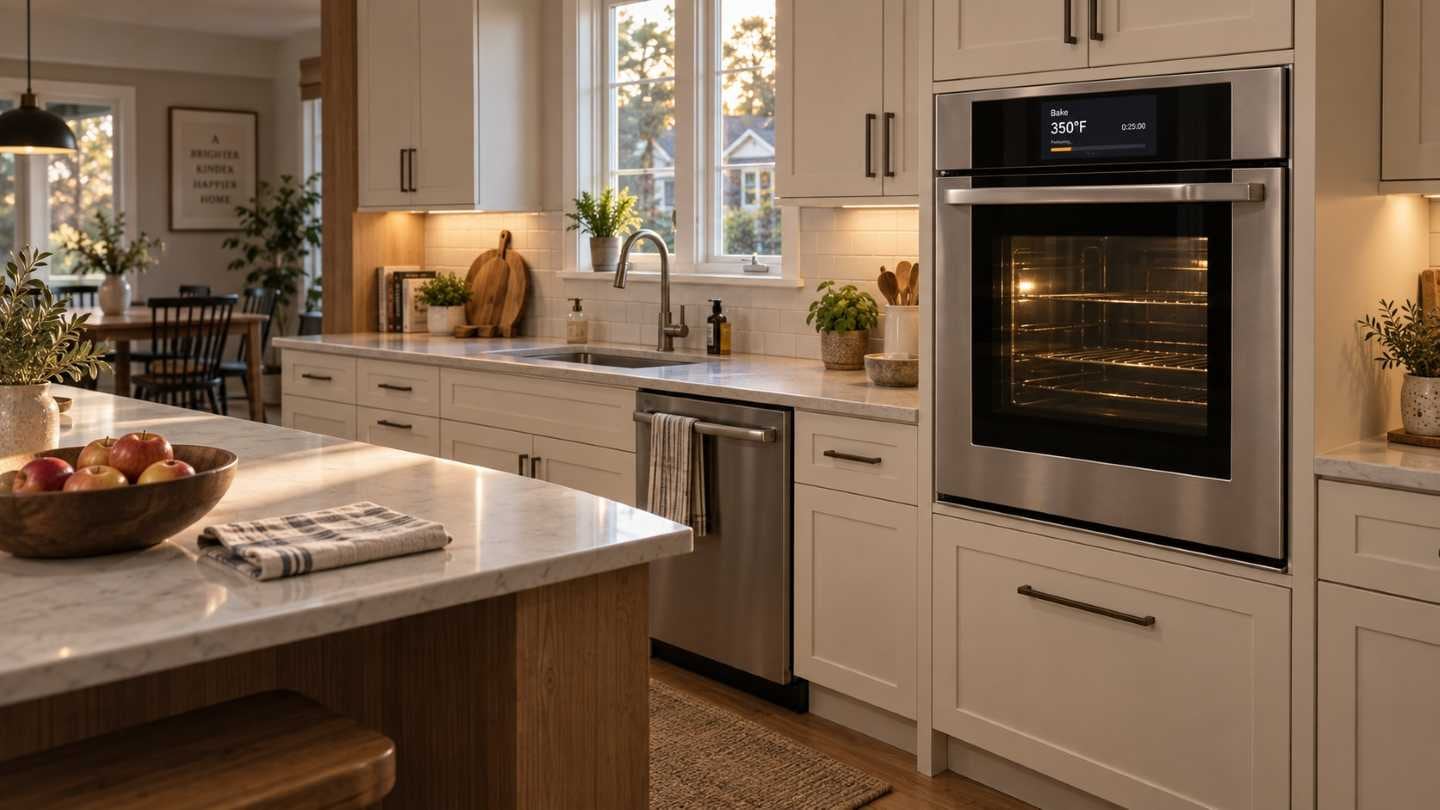
A built-in appliance is furniture first. In this market it is also a claim about the kitchen it sits in.
North American luxury buyers expect a great deal, and the product has to belong to the room around it.
A guideline can specify a tone, which is harder than specifying a layout. What makes a screen read as premium, and how that is written down so that different products arrive at it independently.
We set out the market conditions and wrote them up as UI guidelines for the built-in range.
Technology trends
Written by AEON from public sources. It describes the field, not the project above.
The North American luxury built-in market was long defined by heritage brands with decades of reputation in professional-style cooking. In 2016 two Korean manufacturers moved into it at once. Samsung agreed to acquire Dacor, a California maker of luxury kitchen appliances since 1965, and LG introduced its ultra-premium built-in line, Signature Kitchen Suite, in July of the same year. Both brought large consumer-electronics software organisations into a segment that had been shaped by cooking performance and craftsmanship.
Since the late 2010s, the clearest direction in this segment has been integration and concealment. Panel-ready columns, handle-free fronts and dishwashers with controls hidden on the top edge of the door all let the appliances recede into continuous cabinetry. Samsung's Dacor brand took this to its logical end at KBIS 2026 with a “hidden kitchen” concept placing a refrigerator, cooktop and dishwasher inside curved columns or furniture, while keeping SmartThings connectivity. The interface follows the cabinetry: displays that are invisible until touched, controls that reveal themselves only when needed, and status that appears briefly and then withdraws.
Cooking itself has changed surface. Induction has gained ground in North American kitchens, and the US Department of Energy notes that it heats the cookware directly through an electromagnetic field and can be up to three times as efficient as gas. For interface design this matters more than it first appears. An induction hob is a flat sheet of glass with touch controls, so the main cooking control in a premium kitchen is now a printed or illuminated surface rather than a knob. There is no flame to watch, and heat level, residual warmth and pan detection all have to be shown by light and symbol.
Connectivity has arrived in this tier too, and it creates its own tension. A built-in range is chosen to stay in place for many years, with a long design life, while the phone app and cloud service it depends on may change many times in that period. Luxury makers have to reconcile the slow, craft-led expectations of the room with the much faster update cycles of software. A remote alert that the oven has reached temperature adds convenience; a basic function that depends on an account or a server adds a point of failure that the cabinetry around it does not have.
For the people who cook in these kitchens, concealment brings its own usability problems. When controls hide, discoverability is the first thing at risk, so a hidden interface has to be easy to wake and obvious once woken. When there is no flame or visible element, feedback has to carry more of the burden. Safety states, such as a hot zone after the cooktop is switched off, must stay visible even when everything else is hidden. And because these kitchens are kept for a long time, controls at the appliance itself need to remain complete and understandable on their own, long after the companion app has changed.