Open IoT Keynote Film and UX
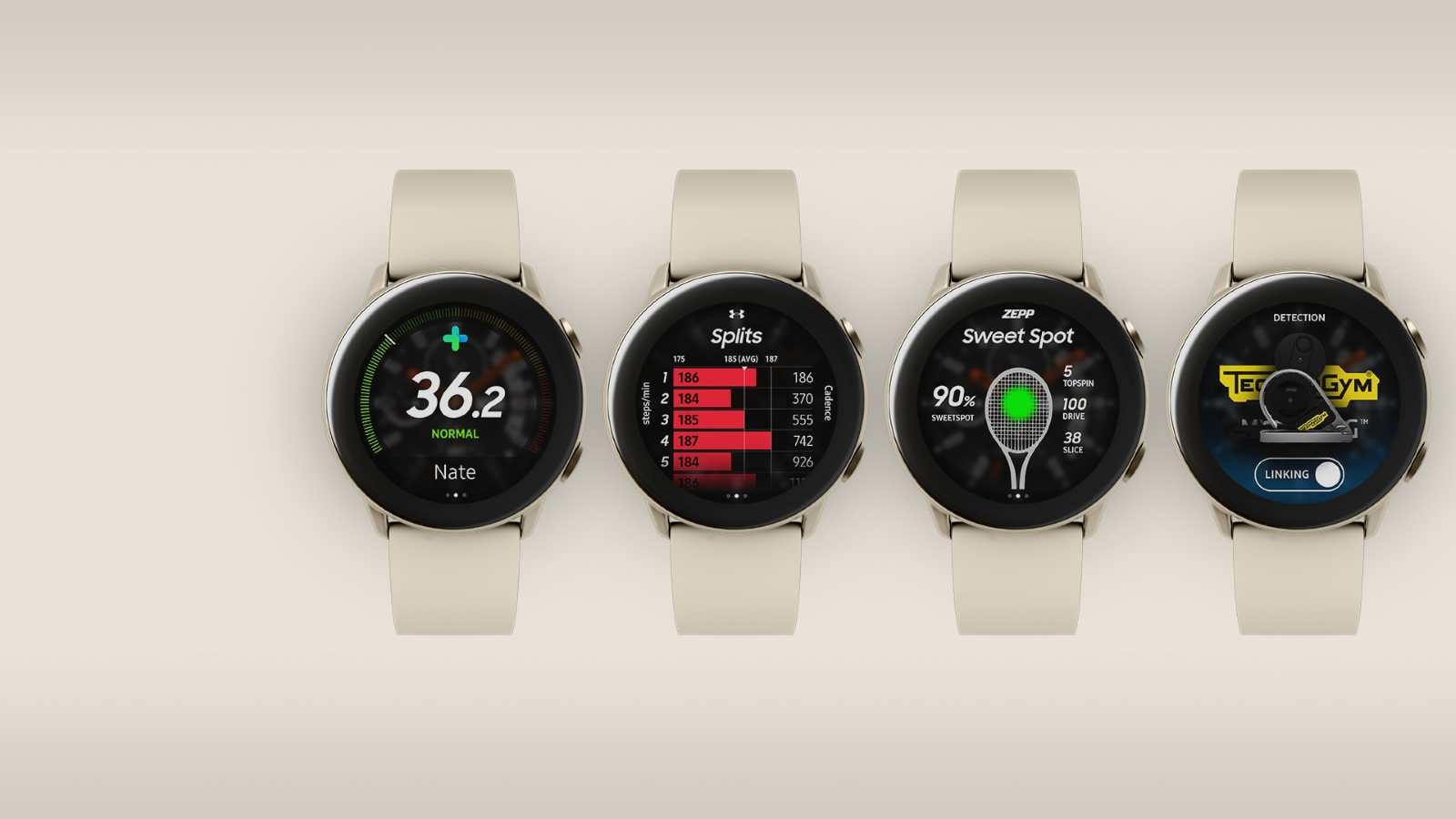
A watch on an operating system of its own has very few apps. The way out was not to write more of them.
Galaxy Watch ran Tizen, and Tizen could not borrow from anywhere else. The shortage of applications was not a backlog; it was the platform.
If the watch cannot host the app, it can still be the thing that reaches it — which turns a platform problem into a connected-device one.
We set a reference brand to make it concrete, showed the linking scenarios as film for the developer keynote, and designed the interface and the guidelines behind them.
Technology trends
Written by AEON from public sources. It describes the field, not the project above.
Since the late 2010s, the smartwatch market has consolidated and its software has changed shape. In 2018 several watch platforms competed for developers' attention, each with its own tools and store. That picture simplified in May 2021, when Google and Samsung announced that Wear OS and Tizen would be combined into a single platform, promising faster app launches, better battery life and one target for developers instead of two. Samsung's watches moved onto the shared platform later that year.
At the same time, the way people use a watch has drifted away from the app grid. Tiles, complications and quick panels now carry much of the everyday interaction, and a growing share of it concerns devices elsewhere in the home. In early 2023 Samsung extended SmartThings on Galaxy Watch to thermostats, air purifiers and blinds alongside TVs and lights, added live views from Ring and Nest cameras, and placed the controls a single swipe from the watch face. Google took a similar route in 2024, adding a favourites tile, watch-face shortcuts and finer device controls to Google Home on Wear OS.
Interoperability made this more practical. Matter 1.0, released by the Connectivity Standards Alliance in October 2022 with contributions from Amazon, Apple, Google, Samsung SmartThings and hundreds of other members, gave lights, locks, blinds, sensors and media devices from different manufacturers a common language. A small screen on the wrist is far more useful as a controller when the things it controls no longer depend on one brand's ecosystem.
The newest layer is conversational. In May 2025 Google said that Gemini would come to Wear OS watches that already ran its assistant, alongside a Wear OS 6 redesign built around the round display. Natural-language requests reduce the need to navigate menus on a screen a few centimetres across, although they still depend on a network connection and on the assistant understanding which device, room or task the user means.
Taken together, these changes alter what a watch interface is made of. The open questions are less about how many apps a platform offers and more about trust: whether a command reached the right device, whether a camera feed is current, whether the watch shows the true state of a door or a thermostat.
For the people wearing these devices, interactions last seconds, attention is divided and the thing being controlled is often out of sight. That puts weight on clear confirmation of outcomes, controls that sit in predictable places, honest handling of failure, and voice and touch paths that lead to the same result.