Samsung Account UX Development
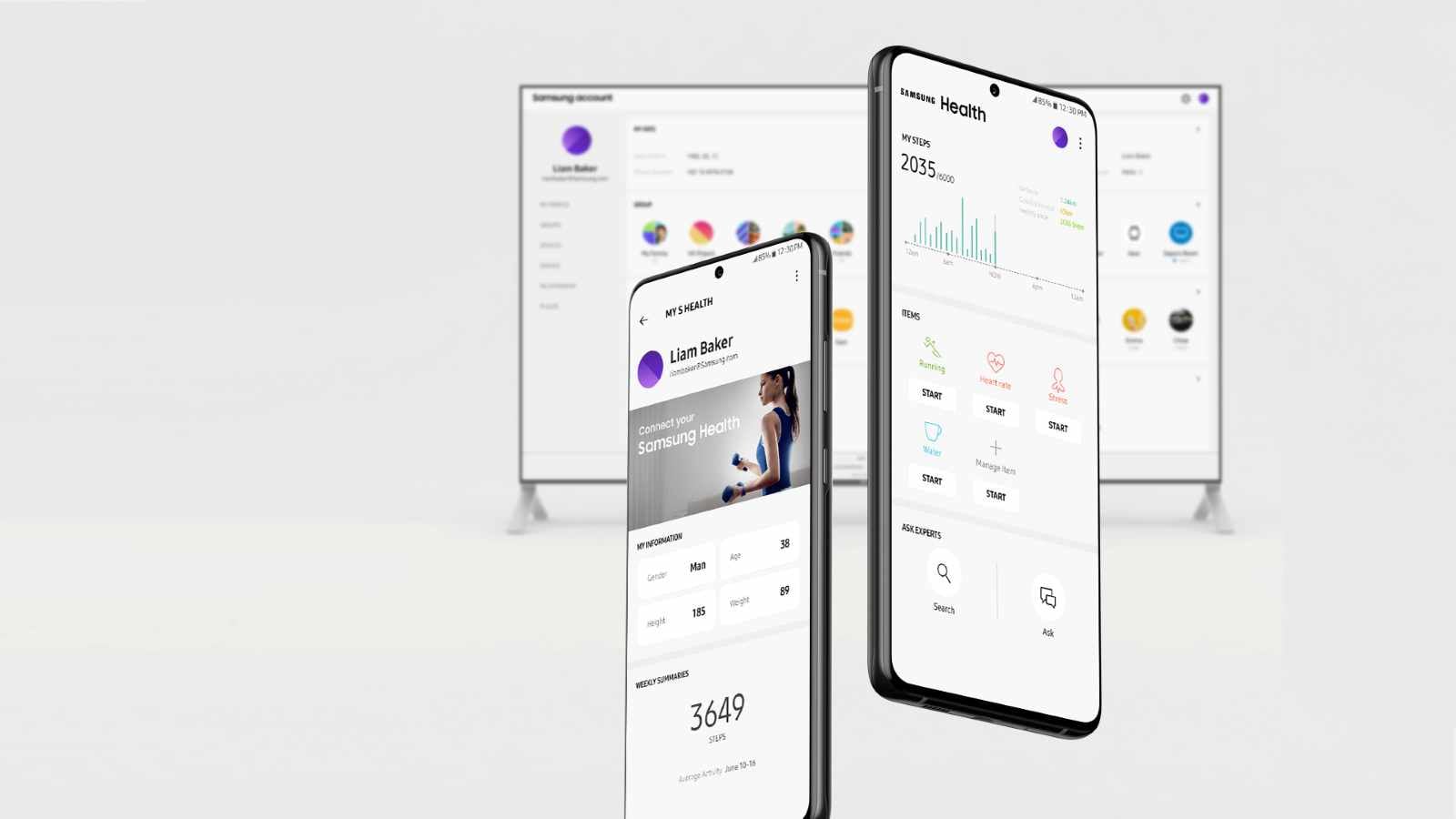
The same account, signed into from a phone, a television, a refrigerator and a browser. Only one of those has a keyboard anyone would want to use.
Samsung Account is the door to all of them, and every device opens it differently.
One policy, four ways of typing. The flow has to stay recognisable while the input method changes underneath it.
We built prototypes that ran on mobile, TV, Family Hub and the web, and used them to show what the improvements would be.
Technology trends
Written by AEON from public sources. It describes the field, not the project above.
Since the late 2010s, signing in has become one of the most cross-device problems in consumer technology. One account now opens a phone, a television, a watch, a car and a home appliance, and few of those offer a keyboard anyone would choose to type on. The direction of travel has been consistent: move the typing to the device that is good at it, and then remove the typing altogether.
The first half of that is now an established pattern. The IETF's OAuth 2.0 Device Authorization Grant (RFC 8628), published in 2019, standardised the approach in which a television or similar device shows a short code and a web address, and the user approves the request on a phone or computer while the device waits. QR codes have since shortened that path further. Samsung's current support guidance, for instance, describes signing a TV into a Samsung account by scanning an on-screen code with a phone that is already signed in, keeping remote-control entry as a fallback.
The second half is the passkey. In May 2022 Apple, Google and Microsoft jointly committed to expanded support for the FIDO standard, including sign-in credentials available across a person's devices and the ability to use a phone to sign in on a nearby device regardless of its operating system or browser. Samsung brought the idea to its own credential manager: from One UI 6, Samsung Pass can create and store passkeys, held in encrypted storage on the Galaxy device.
Four years on, the evidence suggests passkeys are moving from deployment to habit. The FIDO Alliance's Passkey Index 2026, published this month, reports that passkey sign-ins succeed more often than conventional multi-factor sign-ins and that more than a third of successful sign-ins at participating services now use one. The figures are self-reported by member companies, but they match what users see: fewer password fields, more biometric confirmations and more hand-offs between devices.
What remains difficult is coherence. A user may meet a QR code on the television, a fingerprint prompt on the phone, a code on the watch and a password field on an older browser, all for the same account. Each method is sensible on its own; together they can feel like several different services. Recovery is the other weak point. When the phone becomes the key to everything, losing it becomes a much larger problem than it used to be.
For users, the practical shift is from remembering secrets to recognising requests. Interface work moves with it: making it obvious which device is asking and why, keeping the sequence of steps familiar whether it starts on a screen across the room or in the hand, and designing recovery paths that a person under stress can follow without calling for help.