Samsung Cloud Web UX
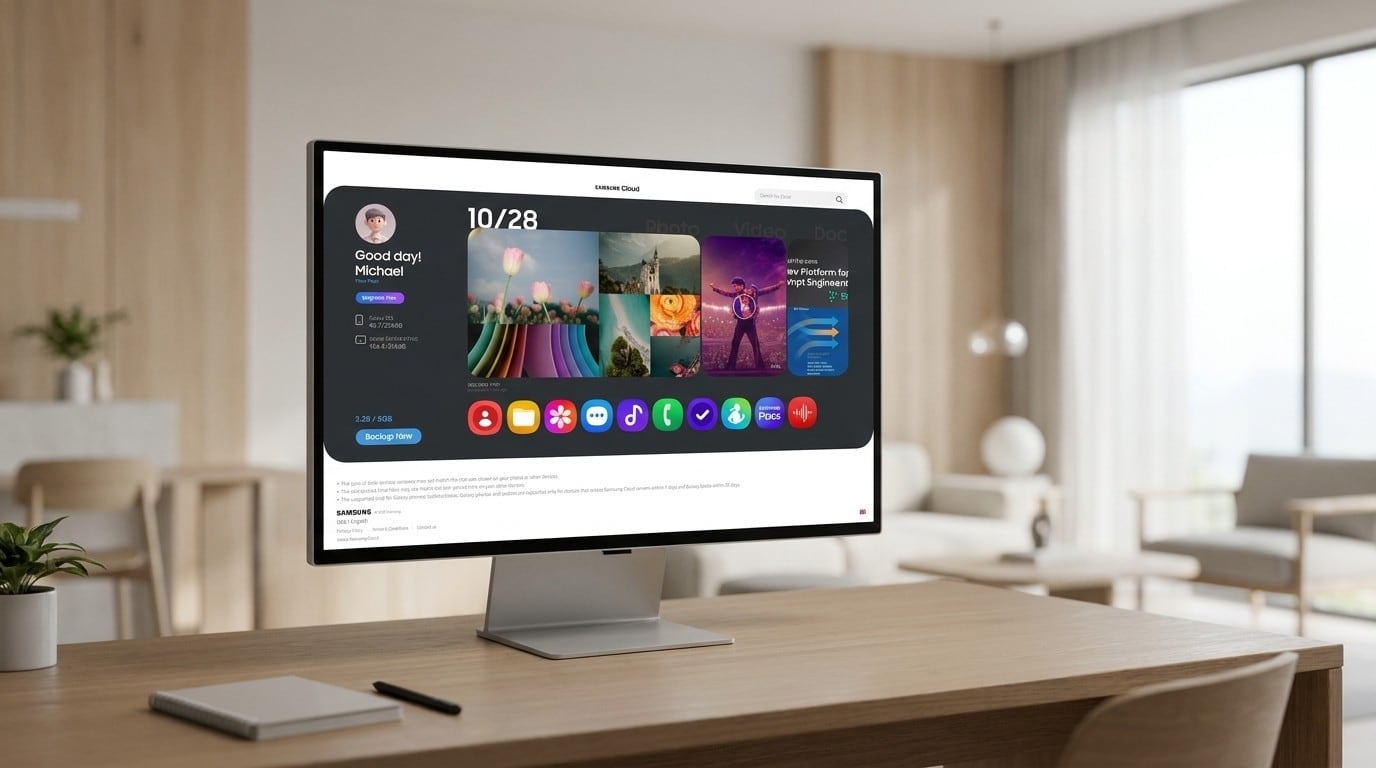
Samsung Cloud had been sharing its ground with someone else's drive. Standing on its own meant deciding what it was for.
Separating from OneDrive raised a question backup itself never has to answer: what does a person come to the web for, when their data lives on a phone?
Mostly the gallery. So the site was built around photographs and what happens to them — syncing, backing up, and the subscription that pays for the space.
And one account is rarely one device. A current phone, an older one still in a drawer, a tablet, a watch, each with its own idea of what has already been saved. The structure has to hold all of them without asking the person to keep track.
Research into how cloud services present themselves on the web, several design proposals, and a responsive HTML guide — all on the One UI base.
Technology trends
Written by AEON from public sources. It describes the field, not the project above.
For most people the cloud stopped being an abstract place for files some time ago. What they actually keep there is a camera roll, and the services that hold those libraries have spent the past five years renegotiating two things at once: what storage is worth, and what a library is supposed to do once it is far too large to scroll.
A turning point for many users came when Google ended free unlimited uploads to Google Photos, announced in November 2020 and effective from June 2021, after which new photos counted against the storage shared with Gmail and Drive. The change made something visible that had been hidden for years: a growing photo library is a cost as well as an archive. Quotas, duplicates and clean-up tools moved from the edges of these products towards the centre.
The second shift is in how libraries are organised. Apple described its iOS 18 update as the biggest redesign of Photos to date, replacing a set of tabs with a single grid and collections the system assembles by itself, such as trips and recent days. Google went further with Ask Photos, a Gemini-based feature introduced in May 2024 that lets people question their library in everyday language. The album, a container the user built by hand, is giving way to structures the service infers on the user's behalf.
Regulation is pulling in a different direction, towards mobility. The EU Data Act, applicable since September 2025, sets out a framework for customers to move between data processing services, and export tools such as Google Takeout have become a routine part of account settings. A personal archive that was once tied to whichever brand of phone a person happened to buy is increasingly expected to travel with them.
The web version of these services has quietly changed role as well. Capture and backup now happen automatically on the phone, so the browser is less a daily destination than a place for the jobs that need a large screen and a keyboard: reviewing thousands of items at once, deleting in bulk, downloading an archive, or sharing with someone outside the ecosystem.
For users, the result is a library that organises itself more each year and asks to be understood less as a set of folders than as a service with its own judgement. Interfaces in this space serve people well when they make that judgement legible: what has been saved and where, why an item appears in a collection, and how to take everything out again. Storage people cannot see into is storage they gradually stop trusting.