SLEEPsense 2.0 UI
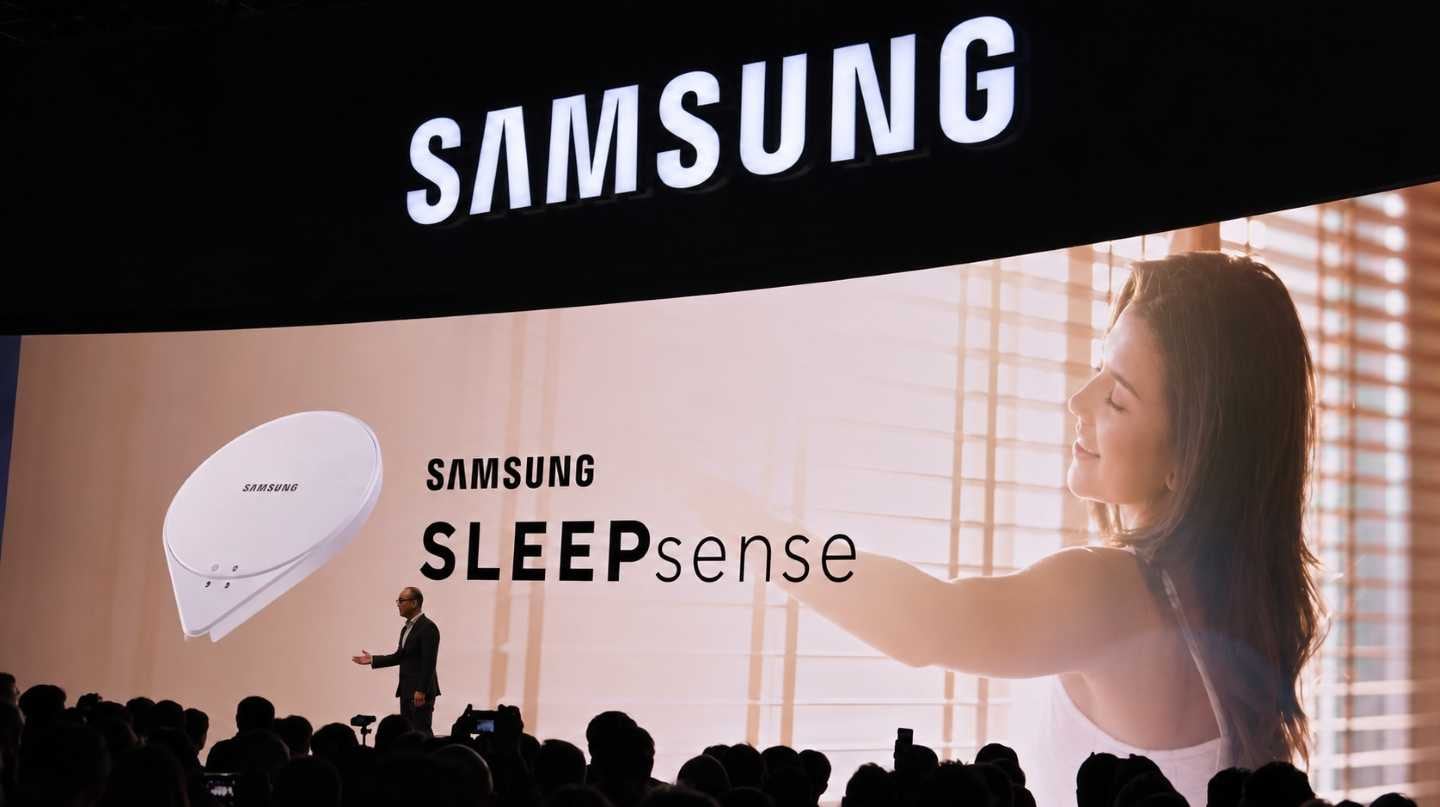
The sensor sits under the mattress and is never touched. The report in the morning is the entire product.
A contactless sensor means the user has no relationship with the device itself — only with what it tells them.
A night produces more data than a morning has patience for. What leads at breakfast, and how much of it belongs in the report a family member sees.
We went through the 1.0 flow first and rebuilt the interface around the structure of the report. On a shared engagement, the interface design was our part.
Technology trends
Written by AEON from public sources. It describes the field, not the project above.
Since the mid-2010s, sleep tracking has developed along two lines: wearables that people put on at night, and contactless sensors that sit under the mattress or on the bedside table. The second line promised data without effort, with nothing to charge on the wrist and nothing to forget. Samsung was an early entrant. It unveiled SleepSense at IFA 2015, an under-mattress sensor developed with the medical device maker EarlySense, which produced a sleep summary in the morning and offered a family-care option for keeping an eye on an older relative's sleep.
Radar has since joined pressure and motion sensing. Google's second-generation Nest Hub, launched in 2021, used a low-power Soli radar chip to follow movement and breathing from the nightstand, processing the motion data on the device and validating its algorithms against polysomnography. The appeal was the same as before, no wearable, but with an explicit privacy argument attached, since a radar sensor produces movement traces rather than images.
The most significant shift of recent years is regulatory. Consumer sleep products long stayed on the wellness side of the line, offering scores rather than findings. That boundary has started to move. In February 2024 Samsung announced that a sleep apnoea feature for the Galaxy Watch had received De Novo authorisation from the US FDA, following approval by Korea's Ministry of Food and Drug Safety in October 2023. It looks for signs of moderate to severe obstructive sleep apnoea over two nights in adults who have not been diagnosed. Apple received US clearance for a comparable notification feature later the same year. Contactless sensing crossed the same line: in September 2024 Withings announced FDA 510(k) clearance for its Sleep Rx under-mattress mat as an aid to diagnosing obstructive sleep apnoea at home, offered in the US through clinical and remote-monitoring programmes.
The fine print matters. Samsung states that its feature does not replace diagnosis and treatment by a clinician and is not intended for people already diagnosed, and the Withings mat is cleared as an aid rather than as a diagnosis in itself. The direction is towards consumer hardware that can raise a flag worth taking to a doctor, not towards devices that replace a sleep study. The result is a widening gap between a wellness layer of scores, stages and routines and a narrow, regulated layer of screening results that carry clinical weight.
For the people reading these reports, the difficulty is telling the two layers apart. A wellness score and a screening notification can appear in the same app while meaning very different things, and a contactless device offers no physical interaction through which a user might learn its limits. Clear separation between advisory and clinical information, plain language about uncertainty, and an obvious route to professional advice are becoming as important to these products as the sensing itself.