Smart Helmet Premium Value-Added Service Consulting
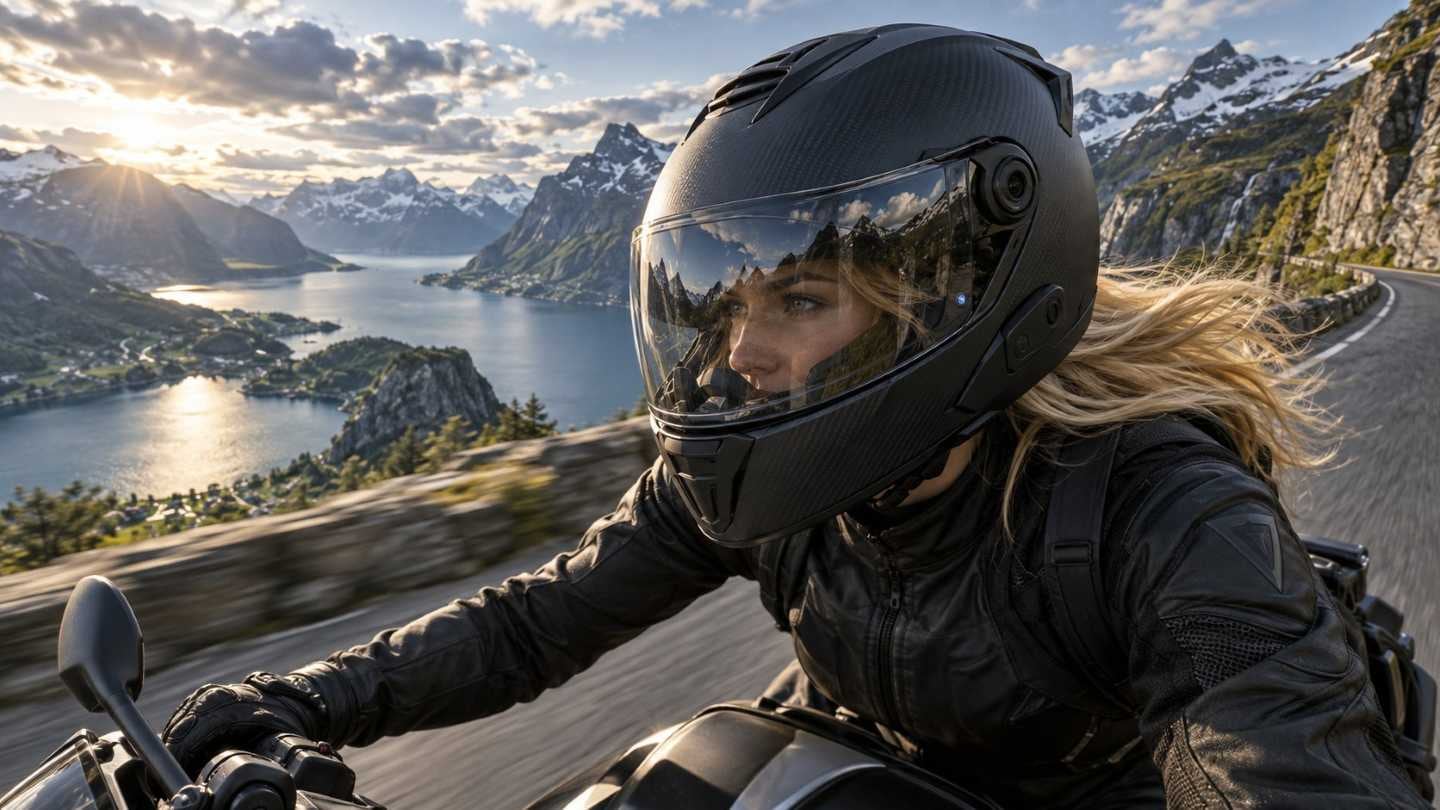
A rider cannot operate anything while riding. Almost the whole service has to happen before the ride and after it.
The helmet carries a camera, a speaker, a GPS receiver and sensors for position, altitude, speed and attitude. What comes off it is one ride recorded twice — as footage, and as numbers. The numbers are what make the footage usable: they know where the climb was, where the speed rose, where the machine leaned, and those are the places worth cutting to.
Everything the rider actually does with it, they do with their hands free — on a phone or on the web, after the helmet comes off. Editing the video, planning the next route, keeping the record of where they have been. The helmet's part is to capture all of it without ever asking to be operated.
And riding of this kind is social. The recording exists because it is going to be shown, so somewhere to show it is not an extra feature; a community site belonged inside the service rather than beside it.
We proposed the direction for the premium services and carried it through to the interface.
Technology trends
Written by AEON from public sources. It describes the field, not the project above.
Since the late 2010s, the connected motorcycle helmet has travelled a winding road. The emblematic early promise was a heads-up display built into the shell, and it ran ahead of what a young company could manufacture: Skully, whose AR-1 had been taking pre-orders, closed its doors in 2016 and filed for liquidation. The industry drew a cautious lesson from it. For several years the durable products were add-ons rather than all-in-one helmets: Bluetooth intercoms clipped to the shell, action cameras on chin mounts, and phones in handlebar cradles doing the computing.
Established helmet makers approached the idea more slowly. Shoei showed its IT-HT at CES in January 2019, projecting speed, engine revs and turn directions onto a small lens in front of the rider's right eye, and planned to sell it only in Japan. In late 2025 the company went further with the GT-Air 3 Smart, developed with the smart-technology firm EyeLights, which places navigation and safety information in the rider's line of sight. The six years between the two say a good deal about how hard it is to fit optics, a battery and wiring inside a shell that must still pass impact tests.
Regulation sits at the centre of that difficulty. When the UN Economic Commission for Europe approved the 22.06 revision of its helmet regulation in June 2020, the text required helmets to be tested with and without the accessories intended for them, and limited approval to the accessories actually tested. A rule like that favours electronics designed together with the shell over electronics bolted on afterwards, and it helps explain why the integrated models now reaching the market carry the names of long-standing helmet brands rather than start-ups.
At the same time, some of the safety intelligence once promised for helmets has settled in devices riders already carry. Apple's 2022 iPhones, for instance, can detect a severe car crash and dial emergency services when the owner cannot, using motion sensors and algorithms rather than dedicated hardware. Automatic crash alerting, live location sharing and rider-to-rider intercom groups now turn up across helmets, communicators and phones alike, and the boundaries between those products keep shifting.
For riders, the open questions are about attention and trust. Anything shown inside a visor competes with the road, so the useful designs keep in-ride information sparse, steady in position and quick to read, and let audio carry what does not need to be seen. Automated safety features raise a different demand: a system that may call for help on its own has to make plain what it has detected, give the rider a clear and simple way to cancel a false alarm, and behave the same way every time, because a rider will only rely on what they can predict.