SmartThings 3.0 UI Guidelines
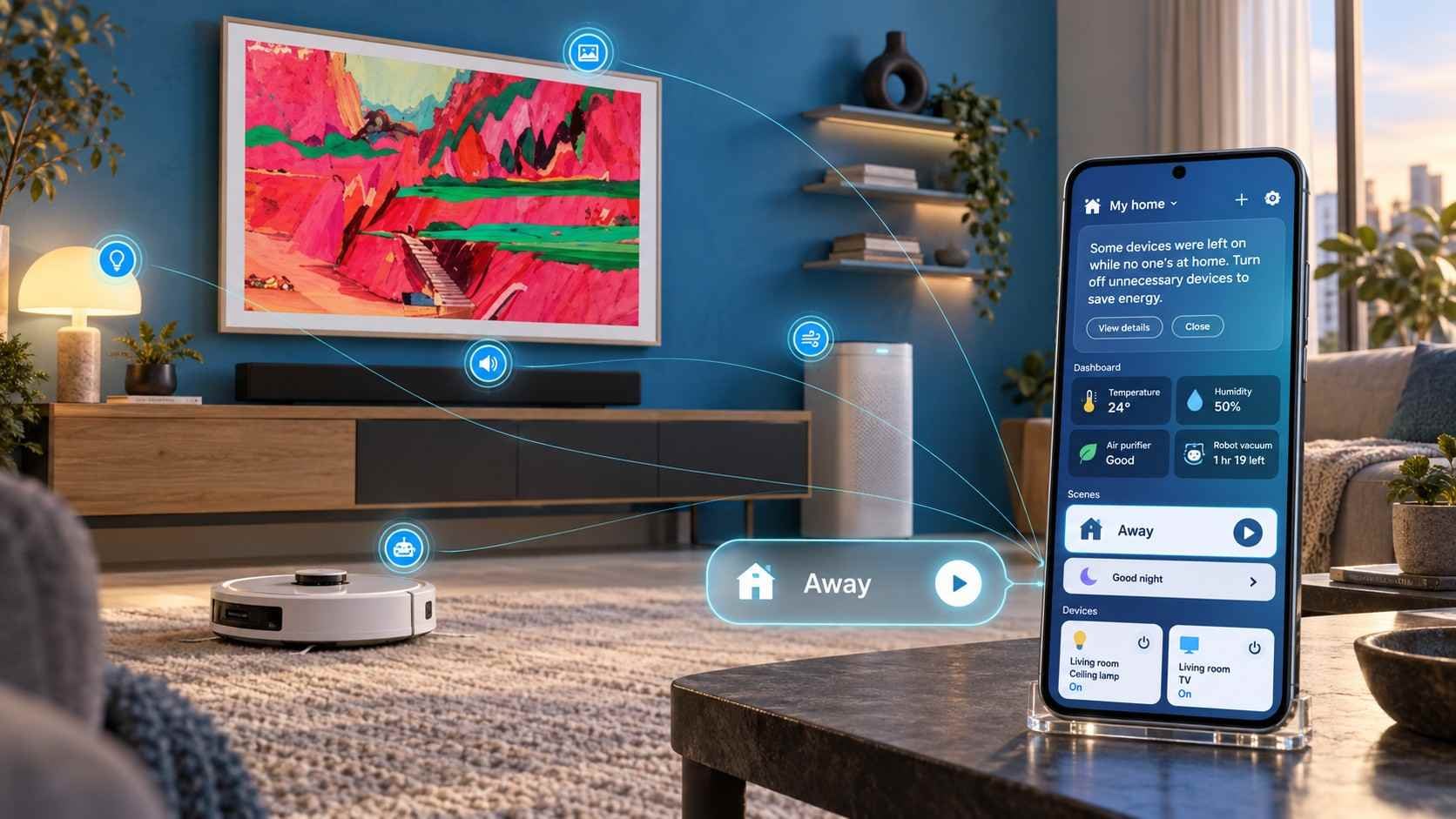
Several smart-home apps had just been folded into one. Everything arrived at once and none of it had been introduced.
Products and functions that had lived in separate apps now shared a single structure, and the structure showed the strain.
The guideline had to decide what all these devices have in common before it could decide how they look. A flow and an information structure that hold whether the thing on the other end is a television or a door lock.
The 3.0 guidelines set the rules across the whole app. Having worked on it since the pilot, we knew why the earlier decisions were made and could move them rather than guess at them.
Technology trends
Written by AEON from public sources. It describes the field, not the project above.
In 2020 the smart home was still divided along ecosystem lines. A device might work with Amazon Alexa, Google Assistant, Apple HomeKit or Samsung SmartThings, but rarely with all of them, and each platform kept its own model of what a light, a lock or a thermostat could do. Buying a device meant first checking a grid of logos on the box.
The industry's response took shape over the following years. In 2021 the Zigbee Alliance renamed itself the Connectivity Standards Alliance, and in October 2022 it released Matter 1.0 along with a certification programme and an open-source reference SDK. The first release covered lighting and electrical products, HVAC controls, blinds and shades, safety sensors, door locks, TVs and other media devices, controllers and bridges, running over Wi-Fi, Ethernet and Thread, with Bluetooth Low Energy used to bring devices onto the network. The definition of what a device type is and what it can do began to live in a shared specification rather than inside each platform.
Later releases widened that shared vocabulary. Matter 1.4, published in November 2024, added device types for solar power, batteries, heat pumps and water heaters, along with EV-charging preferences and energy-aware scheduling. It also introduced an enhanced multi-admin feature, so that a single act of consent can connect a device to several ecosystems at once, and a certification category for home routers that double as Thread border routers. The smart home's centre of gravity was shifting from convenience toward energy management.
Platforms have adapted around the standard rather than disappearing. Samsung now says most Matter devices work with SmartThings out of the box, through hubs built into recent TVs, monitors, refrigerators and soundbars, and through other brands' hubs acting as Matter bridges. Manufacturers have also formed the Home Connectivity Alliance, established in 2021 with the stated aim of breaking down walled gardens between brands. Adoption has been gradual, but the direction is no longer in doubt.
For residents, standardisation means the logic of the home increasingly lives in shared definitions rather than in a single vendor's app. Setting a device up becomes a matter of scanning a code, and the same lock can appear in several apps at once. That raises interaction questions of its own: which app is the authority when two ecosystems disagree, how a household learns who else has access to a device, and how controllers present the same type of device consistently whatever brand sits behind it.