SmartThings Home Appliance GUI,UI Design and Guide
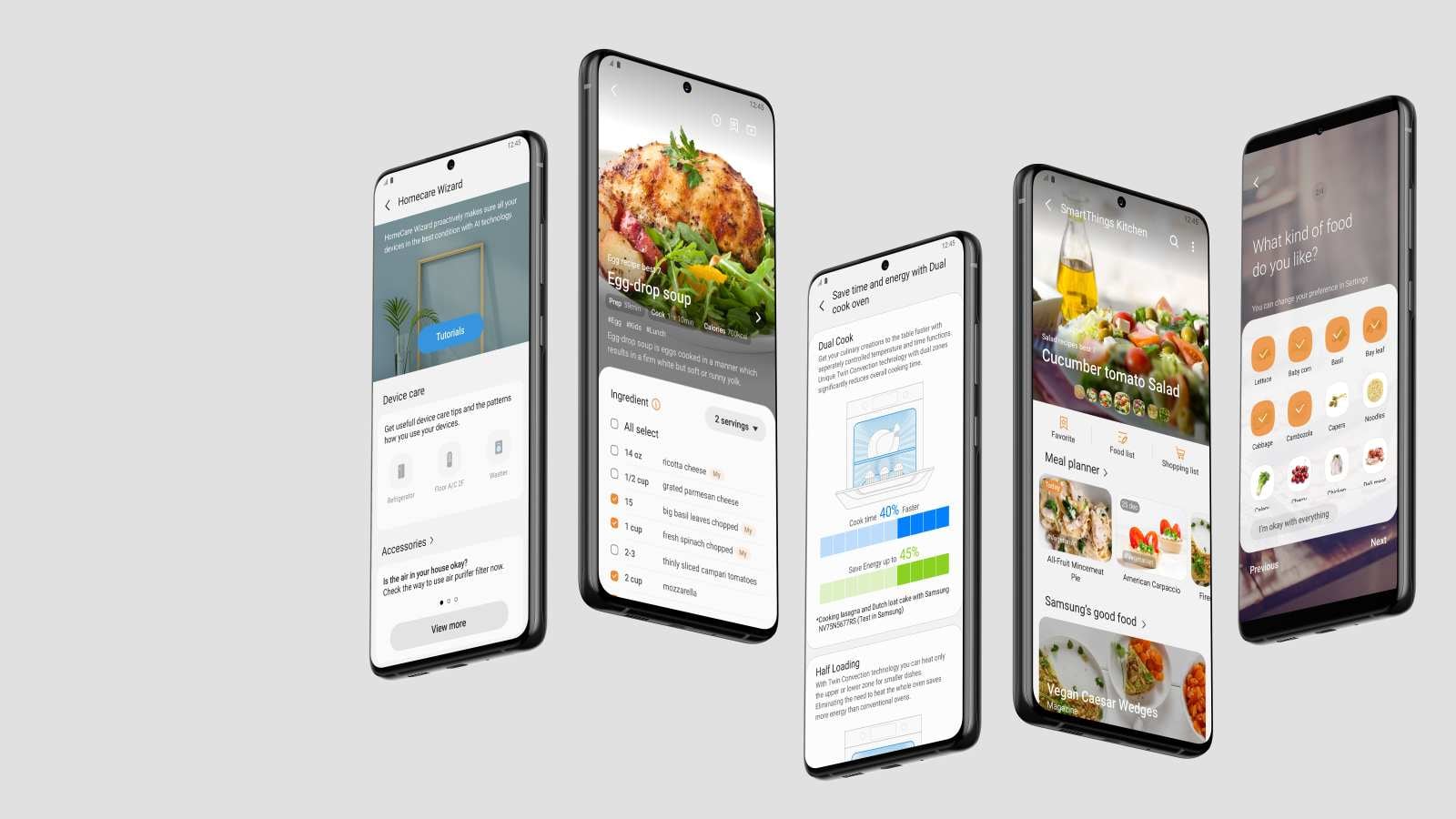
Appliances were joining faster than screens could be drawn for them.
Each product brought its own control screen, and the number was climbing.
Consistency at that speed is a matter of writing the guide while drawing, not after. Otherwise every product settles its own answer and the guide arrives only to describe the mess.
Product screens and the guide were made together, and the scope grew during the work.
Technology trends
Written by AEON from public sources. It describes the field, not the project above.
Around 2020, the main job of a connected-home platform was to give each device a usable control screen in the app and to let people switch things on and off from a distance. In the years since, the emphasis has shifted from controlling devices one at a time to coordinating them. Hubs have moved inside ordinary appliances, automation has become something people describe rather than configure, and energy has become a concern the whole household shares.
The hub was once a separate box that enthusiasts bought and paired. At CES 2022 Samsung announced that SmartThings hub software would be built into selected TVs, monitors and Family Hub refrigerators, with support for Matter planned, removing the need for a dedicated device. The refrigerator that once needed its own control screen in an app could now host the connections for the lights, plugs and sensors around it. The question of where a device's interface lives became less tidy: on the phone, on the device, or on whichever large screen happens to be nearby.
Automation has gone through a larger change. Writing routines used to mean assembling triggers, conditions and actions in nested menus. Google's Gemini for Home, launched in October 2025, lets people create automations by describing what they want in a sentence, which Google itself framed as taking the feature out of menus built for enthusiasts. The interface task moves from building a rule to checking an interpretation: did the system understand what was meant, and will it do what the person expects at three in the morning?
Energy has given coordination a practical purpose. SmartThings Energy, which Samsung describes as the first platform of its kind to earn ENERGY STAR certification as a smart home energy management system, added automatic participation in utility demand-response programmes and an AI energy mode for appliances in 2023. Standards are moving the same way: Matter 1.5, released in November 2025, defines how devices can receive tariff and grid carbon-intensity data in a common format and adjust their operation. A washing machine is no longer only something to start and stop. It becomes a participant in decisions made for the whole house.
For the people living with these systems, the useful question is less about finding the right control screen and more about understanding what the home has done and why. A wash moved to an off-peak hour, a routine that fired unexpectedly, or a device switched off by an energy event all need a plain explanation, a preview before they take effect where possible, and an override that is easy to find. As the system takes on more of the doing, the interface takes on more of the explaining.