ST Service UI/GUI/VI Design and Guide
A television that tunes itself for a game, and keeps an eye on a child or an elderly parent while it does.
The service linked a smart TV to a phone, and it was asked to do two unrelated things at once.
Nobody pauses a game to adjust the lights. So one question was how the house gets operated without leaving what you are doing; the other was how a carer learns what is happening while it is happening.
We made the interface, the graphics and the visual identity with a guide to go with them. The scope grew during the work.
Technology trends
Written by AEON from public sources. It describes the field, not the project above.
Since the late 2010s, the television has quietly become one of the most capable computers in the home. It has a large screen, a constant power supply and a place in the room where people gather, and manufacturers have spent the period giving it jobs well beyond showing programmes: games platform, smart-home controller and, more recently, part of how families look after one another.
Gaming changed the set's relationship with the devices plugged into it. HDMI 2.1 introduced Auto Low Latency Mode, which lets a console or PC signal the display to switch into a low-lag mode automatically, and back again when a film starts, sparing players a trip through the picture settings. Cloud gaming then removed the console altogether for some players: Samsung's Gaming Hub brings streaming services including Xbox and NVIDIA GeForce NOW to its 2022 and later smart TVs. The screen increasingly configures itself around what it is being used for.
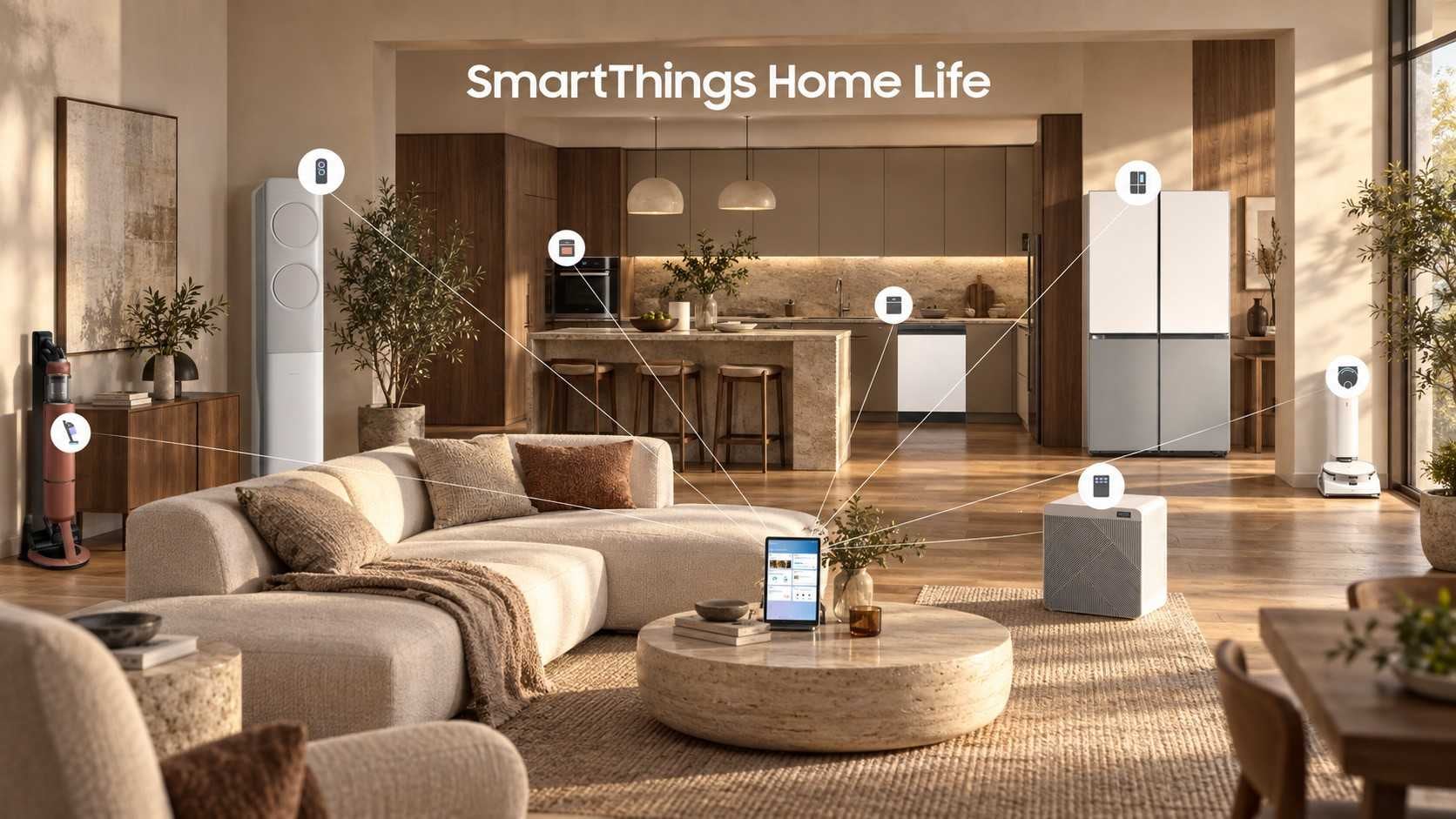
At the same time, the TV took on a role in the connected home. Recent Samsung sets include a built-in SmartThings hub, so the screen in the living room can act as the controller for lights, sensors and locks, including Matter devices from other brands. Apple TV plays a similar part in Apple's Home ecosystem. The household's largest display has become a natural place to see, at a glance, what the rest of the home is doing.
The newest development is care. Populations are ageing quickly: the World Health Organization expects the number of people aged 60 and over to double to 2.1 billion by 2050, and many families are turning to connected devices to keep an eye on relatives who live alone. Samsung's SmartThings Family Care lets carers check on a relative's well-being remotely, set up routines that flag unusual changes in daily activity, and send medication and appointment reminders, with Samsung TVs from 2024 onwards and refrigerators extending what it can do. Household appliances are being enlisted into a task once handled by phone calls and visits.
For the people involved, the TV's widening role raises distinct interaction questions. Players benefit from settings that follow the content automatically; residents need home controls reachable from the sofa without digging through menus; and in care, both the person being looked after and the carer need to understand what is being observed, who can see it and when an alert is justified. The more a shared screen does on its own, the more its design has to make those behaviours visible, and open to consent, for everyone in the room.