UMEX2026 Vision60 Promotional Film
Also known as Ghost Robotics Vision 60 · quadruped UGV
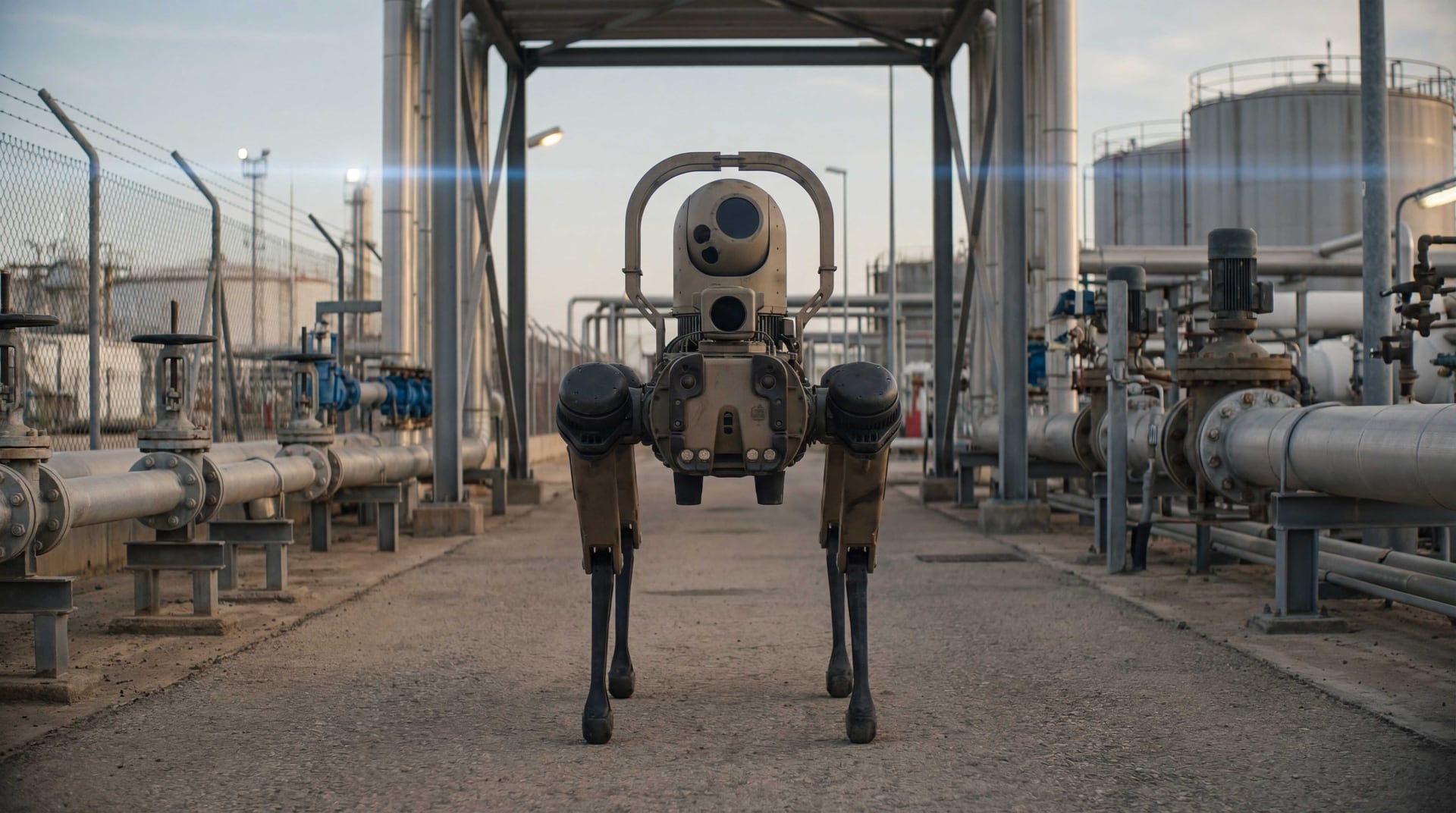
Vision 60 is a quadrupedal unmanned ground vehicle made by Ghost Robotics, and UMEX is the unmanned systems exhibition held in Abu Dhabi.
Vision 60 (also written Vision60) is a mid-sized, all-weather quadrupedal unmanned ground vehicle developed by Ghost Robotics, a US company majority-owned by LIG D&A. It can be teleoperated or run semi-autonomously, and armed forces have used it for tasks such as base perimeter patrol. UMEX is a biennial unmanned systems exhibition and conference held at ADNEC in Abu Dhabi, and its 2026 edition took place in January 2026.
AEON produced a promotional film on Vision 60 for LIG D&A's presence at UMEX 2026.
Technology trends
Written by AEON from public sources. It describes the field, not the project above.
The Gulf has become one of the most active markets for unmanned systems, and Abu Dhabi's UMEX is where that is most visible. The 2026 edition, held at ADNEC from 20 to 22 January, was the largest yet, with exhibitors from around 40 countries and a record attendance. It was organised with the UAE Ministry of Defence and the Tawazun Council, with EDGE Group as a strategic partner, and it added live demonstrations, an autonomous drone racing championship and a zone for civilian autonomy.
The UAE is not only hosting the show; it is buying and building. In January 2024 EDGE announced that its Estonian subsidiary Milrem Robotics would supply the UAE Ministry of Defence with 20 tracked robotic combat vehicles and 40 THeMIS ground robots, presented as the largest combat UGV order to date. The package was structured as an experimentation and trial programme, with Milrem training UAE personnel to operate the vehicles, rather than a straight purchase. Saudi Arabia is pursuing a similar logic through its General Authority for Military Industries, which ties drone programmes such as the SkyGuard UAV contract with SAMI to a national goal of localising more than half of defence spending by 2030. Foreign suppliers in the region are increasingly expected to bring local production, training and technology transfer with their products.
Legged robots fit a particular part of this demand. Gulf states guard long perimeters around airbases, ports, energy plants and other critical sites, often in heat and terrain that are hard on people and wheeled vehicles alike. Quadrupeds can climb stairs, cross rough ground and patrol fixed routes while sending sensor feeds back to an operations centre. Explosive ordnance disposal is a second use. In December 2025 Ghost Robotics released a six-axis manipulator arm for the Vision 60 aimed at EOD, door opening and object retrieval, which the robot's software treats as a fifth leg; customers also used it to look around corners at eye level.
The broader direction is towards robots as configurable carriers rather than finished products. Buyers in the Gulf want platforms that can take local sensors, radios and payloads, that can be maintained in-country, and that fit into national command networks. Exhibitions such as UMEX have become venues not just for showing hardware but for signing the partnerships that make that possible.
For operators, security and EOD work both depend on attention over long periods. A patrol robot may run for hours with nothing to report, so the interface needs to bring forward the rare event that matters without tiring the person watching. Remote manipulation is different: handling a suspect object calls for good depth perception, force feedback and camera views the operator can trust. Training, local language support and interfaces that work for crews with different levels of experience will shape how widely these systems are used.