VIT Create UI
A visual effects studio turning its own craft into software that other people drive.
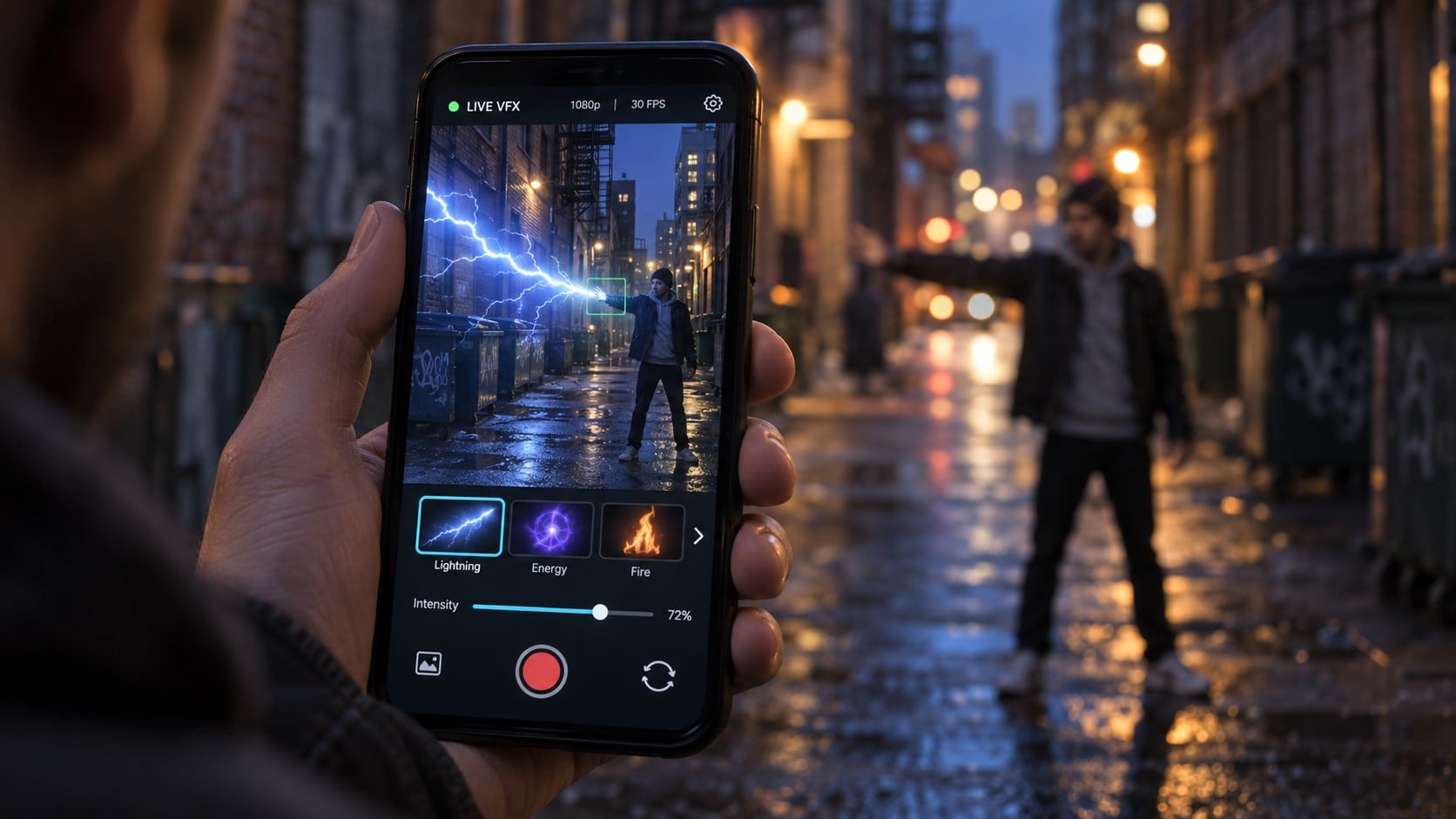
Real-time effects running off a camera — in a photo booth, or on a phone in someone's hand.
The company's advantage is the effects; the risk is that only the company can operate them. So the interface had to make an edit quick for someone who is not a compositor, and keep the software behaving the same way in places as different as a booth and a handset.
Technology trends
Written by AEON from public sources. It describes the field, not the project above.
Real-time camera effects have moved from novelty to infrastructure in little more than a decade. Face filters on social apps taught a generation to expect a camera to alter what it sees, live, and the tools for building those effects grew into ecosystems of their own, with independent creators, brand campaigns and agencies that specialise in nothing else.
That ecosystem is consolidating, and the platforms are pulling in different directions. Meta shut down its Spark platform for third-party effects in January 2025, so that effects made by brands and independent creators disappeared from its apps while Meta's own remained. Snap moved the other way, widening who can author: in June 2025 it released Lens Studio apps for iOS and the web that let people build lenses from text prompts and simple editing tools, with the desktop application kept for professionals. For studios that build effects, the lesson is that a single platform is a fragile home.
Generative models are changing what an effect is. Classic augmented-reality effects track a face, hands or body and attach graphics to them frame by frame. Generative effects reinterpret the whole image, often on a server and after a short wait. Snap's sponsored AI lenses, launched in April 2025, generate personalised images of users with the company's own generative technology in place of hand-built 3D and visual-effects work. The two kinds of effect now sit side by side, and the line between a filter and an image-generation request is blurring, bringing questions of latency, processing location and consent that tracking-based effects rarely raised.
Physical venues show the same appetite in another form. In Korea the self-service photo studio has become a fixture of shopping streets. Life Four Cuts alone reports around 120 million visits since its 2017 launch and some 410 stores, with unstaffed booths that run around the clock, automatic retouching, output sized for social media, and limited-edition frames tied to K-pop idols and baseball teams. The booth has become a social ritual, and its effects are part of the reason people return.
For the people in front of the lens, expectations and anxieties are rising together. They expect an effect to respond at once, to flatter rather than distort, and to work in poor light and crowded frames. They increasingly need to know when their image is being reinterpreted by a model rather than decorated, where that happens and whether the result is kept. For those who build and operate effects, clear previews, easy ways to undo, and honest signals about what the software is doing to a face are becoming as important as visual polish.